

Product Showcase: Calm in the chaosBY THE FINANCIAL STANDARD TEAM | MONDAY, 1 JUN 2026 12:00AM
Markets can overreact. A disappointing earnings result, a change in management or a period of uncertainty can quickly turn a company into one investors would rather avoid. Far less attention is paid to what happens between periods of uncertainty and stability. In that space between sell-off and recovery lies the under-explored story of contrarian investing. It's one where every decision demands mental stamina and a level-head. That's why Paul Fairbrother, institutional portfolio manager at MFS Investment Management, doesn't fear volatility. As Fairbrother puts it, "Our investment philosophy is to always run into the 'burning building' when people are coming out and be that contrarian in the room that's going in the opposite direction." That burning building could be a market bubble and bust, a global pandemic or a geopolitical crisis. In recent months, the market is catching fire from supply chain disruptions. At a company level, Fairbrother and the team would be drawn to large companies, often household brands, in the thick of controversy, like a profit warning or a management restructure. It's in this space where others fear to tread that the MFS Global Contrarian Equity Trust gets down to work. Margin of safety Before the sharemarket became a sophisticated game of dots on a graph and instant trading, it was a simple case of investing in good companies. A year prior, the Chinese market bubble had burst in the worst way possible, plunging 43% in a few months and dragging the rest of the world with it. No investment book could prepare investors for such a scale of market dislocation. But to MFS, the numbers may be different, but they've seen it all before. Founded in 1924, MFS is one of the longest-running asset managers in the world, and they've lived through the dotcom bust, the rise of hedge funds, the proliferation of quant strategies and, more recently, indexed investing. That experience shaped their core belief that markets will always be driven by fear and greed, which led to their contrarian strategy that exploits those emotional overreactions and turns them into portfolio returns. "We've been doing this for nearly 10 years now. We've seen market cycles come and go, and we're focusing on performing well through that, and in different environments. He acknowledges that there were some difficult periods. "In 2024, there was the very narrow momentum market that was powered by mega caps and that almost one-way bet where only a few stocks were driving the market was particularly challenging." The Trust also needs to stay the course in periods dominated by passive flows, where a handful of expensive growth stocks drive index returns, and when company valuations temporarily don't matter. To navigate those times, it relies on a proven system anchored by four investment pillars. First, the fund only buys stocks on cheap valuations because that reduces their reliance on uncertain forecasts. Second, they stick with a bottom-up, not macro-driven, approach, which reduces their vulnerability to rate forecasts. Third, regardless of the share price, the company's balance sheet can survive a Global Financial Crisis (GFC) stress test. Finally, Fairbrother says that a contrarian strategy has to be 'emotionally resilient', meaning you can't be attached to any one idea and you need to hold your nerve no matter how the markets are behaving around you. "We work very hard on what we call a margin of safety, particularly around our downside risk modelling, so we can get the odds stacked more in our favour." Investing in controversy Asked what stocks the Trust invests in, Fairbrother said that there have been various types over the past periods, but three areas stick out the most. "The first would be in the deep value space where there's perhaps a big risk arbitrage between the upside and downside on the stock. With a capital cycle lens of looking through those companies, particularly when capital is coming out of an industry, it's quite good for the incumbent players that are left." Then there are the quality compounders or distrusted growth companies. "These are good companies that fall on hard times. That's exploiting the human-nature element to this, where we're prone to extrapolate news, and when it's good, you tend to get too optimistic and overprice a stock, and when it's bad, people get too pessimistic, assume the news flow is going to stay bad and eventually underprice the stock." The rich pickings for the fund are the restructuring plays. "Often with good companies, they make mis-takes. There are self-inflicted wounds like doing an M&A that goes wrong or they change management and it doesn't work out," said Fairbrother. Because the Trust has a large team of analysts who understand companies deeply, it can look past short-term controversy and benefit as share prices return to reflecting fundamentals. No room for a benchmark In a world inundated with strategies set against a benchmark, the MFS Global Contrarian Equity Trust has a concentrated portfolio of 30-60 stocks with a focus on absolute returns. "We're aware of the benchmark, but we don't try and build a portfolio around it. We want an idiosyncratic portfolio of risks that are not slaves to the bench, and that's the contrarian instinct in us." "I put the question back to the investor and say, 'Do you want to own the stock or the industry when it's three per cent of the benchmark or when it's 30%?'" He argues, "If a stock is already 30% of the bench, everyone's already in there. They [everybody] own that stock. We want to own the unknown stock that's not in the bench." Without the need to hug a benchmark, the team has more control - but also more at stake - in their portfolio. Here's the best bit though. Both traditional and contrarian investors get blindsided by market shocks in equal measure. While the traditional investor takes whatever the market serves, the contrarian fund manager Fairbrother orders his usual: bad news, turbulence and a generous heap of conviction. Related News |


Editor's Choice
Treasury responds to Debelle's review into the AOFM
|Bravura ups guidance, reports earnings increase
|MaxCap hires from Vanguard, AustralianSuper
|Zenith snags mandate from Granite Bay
|
Products



Expert Feed


When geopolitics becomes a portfolio risk
Does association membership still matter?


Digital assets and where they stand in 2026

Rethinking default design in a changing market environment
Featured Profile
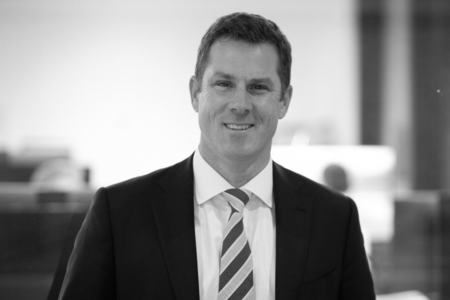
Blake Briggs
FINANCIAL SERVICES COUNCIL