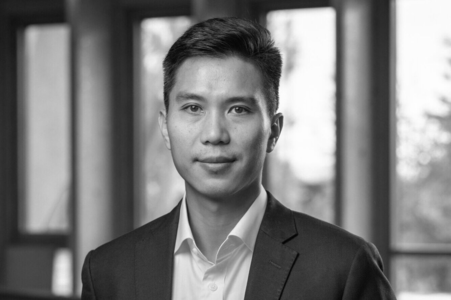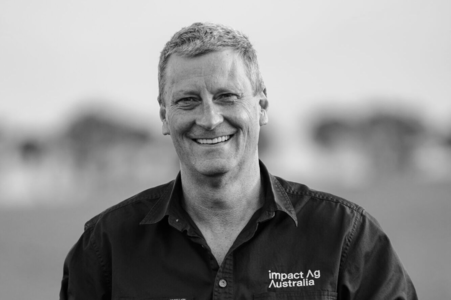

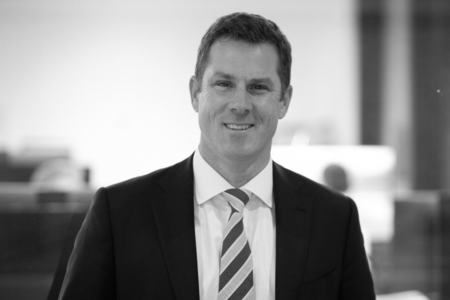
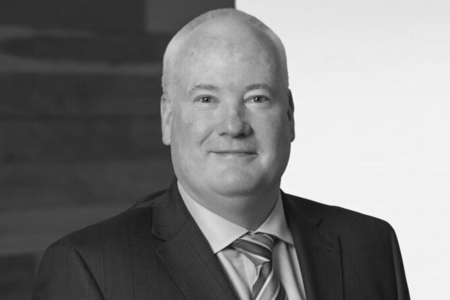
Raising the barSince becoming chief executive, Blake Briggs has renewed the Financial Services Council's influence, expanded the membership base, and strengthened its policy and advocacy credentials. Karren Vergara writes. Blake Briggs' career has been defined by periods of change. At the beginning of his professional life, equipped with a degree in industrial relations, Briggs moved to Canberra and worked on the development of the Fair Work framework, not as a political staffer, but a public servant involved in the legislative process. We now have a lot of momentum, financial strength and a broad and deep membership base, with significant capability and expertise across the industry. This was around 2009, when the Labor government overhauled the nation's workplace relations system.Briggs was part of the committee of industrial legislation process, which was much like a formal consultation of all peak bodies as the government completely revamped industrial legislation. "I always encourage people interested in politics or commerce to study industrial relations because it explains a lot about the underpinning of Australia's political and economic systems, regardless of political leaning," he says. Those types of opportunities littered Briggs career, helping him turn what seemed to be disruptions at the time into opportunities. "When you find yourself in a period of significant change, you learn a lot more and a lot quicker compared to working in an organisation where everything is running smoothly," he says. During that time, he also started his Juris Doctor. That took about seven or eight years to complete, partly because Briggs moved from Canberra back to Sydney and transferred universities. He moved on to join not-for-profit Business NSW before becoming the superannuation and financial services policy manager at the Financial Services Council (FSC) for more than six years, working alongside now-senator Andrew Bragg. Briggs found himself in another formative period as superannuation policy became increasingly central to national political debates. "The FSC was an incredible place to develop expertise in economic and financial services policy, as well as political advocacy, given that superannuation has always been highly politicised, with constant reform and strong industry lobbying," he says. Briggs left for senior roles at Gateway Network Governance Body and Westpac before taking charge of the FSC in January 2022, spearheading a transformation that sought to reposition the peak body as a central, pragmatic force in financial services. His appointment came at a pivotal moment. The financial services sector was still grappling with the aftermath of the Hayne Royal Commission, which triggered widespread scrutiny, structural change and a crisis of trust. "The FSC had an opportunity post-Royal Commission, and following the break-up of the conglomerates, not to only become a better representative of the whole industry - not beholden to any particular strong voices or sectors - but also to reposition ourselves firmly at the centre of the political debate," Briggs notes. That means working constructively with both sides of politics. "Our relationships run deep across the political spectrum, and that's been incredibly positive. Whether we have a Liberal or Labor government, or changes in ministerial staff, we've been able to show up with good, evidence-based policy, have constructive discussions, and build trust with both sides," he explains. "Since I took over, we leaned into public policy debates and have not been afraid to show no fear or favour to the government of the day." By the early 2020s, much of the industry faced a period of instability. Briggs saw another opportunity in that disruption. Many large financial services conglomerates had unwound, fundamentally altering the structure of the sector and, by extension, the FSC's membership base. Under his leadership, the FSC has grown from about 100 member organisations to 140, reflecting a broadened base that spans fund managers, super funds, advice businesses and platforms. This "broad-church" approach has become a defining feature of the organisation. "We now have a lot of momentum, financial strength and a broad and deep membership base, with significant capability and expertise across the industry," Briggs says. That lends to drawing on "the best and brightest people in the sector to develop strong public policy for the industry." Equally significant has been a deliberate shift in governance. Where bank-owned entities once dominated the FSC board, representation is now more balanced, creating what Briggs describes as a "healthier dynamic" and reinforcing the adage of speaking for the industry as a whole, rather than just one segment. "Unlike single-sector bodies, we can work through differences internally and develop policy that reflects the broader interests of the industry and consumers," Briggs says. On the world's stage, Briggs uses his expertise to represent Australia in Business at OECD's Private Pensions Expert Group. The organisation works closely with the OECD and governments to facilitate dialogue and convey business perspectives, priorities and positions that reflect in the OECD's policymaking. The organisation also conducts research on global pension systems. Briggs contributes by sharing insights into Australia's pension system, as well as learn about other countries' pension systems. "There is currently an arm wrestle in Asia on whether to use pension savings to allow individuals to buy a home, just like in Australia. It was a real eye opener for me to see this issue is not uniquely an Australian issue," he says. It is a common theme across jurisdictions, one which Briggs describes as "illuminating" as Australia continues to debate if preserving retirement savings and enabling access for housing is the right solution for its citizens. Outside of work, Briggs' commitment to community mirrors the collaborative ethos he promotes professionally. A dedicated surf lifesaver, he serves as president of Clovelly Nippers, overseeing a program that involves hundreds of children, parents and volunteers. "The Clovelly Nippers junior surf lifesaving program has about 550 children, more than 1000 parents and hundreds of volunteers who help with water safety, our barbeques and so forth," he says. Briggs' two sons are also in Nippers, with the eldest first joining the under-6s program. Running the program - with early starts and significant coordination - is, by his own admission, akin to a second full-time job. "I've watched them go from kids who were scared of seaweed to being able to handle the open ocean and surf big waves," he says. "It is incredibly rewarding." Like other non-profit organisations, Nippers relies on people giving their time, often in the evenings or early mornings. "It really relies on a lot of people willing to put their hands up, so no single person is left doing everything," Briggs adds. From the beach to the boardroom, Briggs' experience and how he devotes his time and efforts reinforce a key principle: that strong communities, like strong industries, rely on collective effort. fs
![]() Giving backWhen Judith Fiander first walked in the doors of Australian Philanthropic Services her intention was to volunteer for a few months. Fast forward 14 years ... ![]() Through the cyclesWhat makes an economist an economist? TCorp chief economist Brian Redican reflects on over three decades of navigating Australia's economic cycles. Riddhima ... ![]() Purposeful progressFacing his greatest test yet in metamorphosing MLC Super, Dave Woodall is adamant the juice will be worth the squeeze. Jamie Williamson writes. ![]() Leading with trustAkumin chief executive Matt Lawler is steering AMP's adviser network through its split from the wealth giant and charting a new path forward. Riddhima ... ![]() Important stepsWhile SMSF Association chief executive Peter Burgess is an extremely self-disciplined leader, he believes the association's advocacy uplift for the self-managed ... ![]() Invisible stringSimone Constant has been a commissioner at the Australian Securities and Investments Commission (ASIC) for two years. In that time she has achieved a ... ![]() High achieverSarah King has crossed the seas and different industries to land at Stockspot, where she helps the fund manager and digital investment adviser reach new ... ![]() Ready to engageAs chief engagement and growth officer, Joshua Parisotto is determined to improve outcomes for HESTA members and employers and brings all he learns outside ... ![]() Broad strokesWith around two decades under her belt, Mary Delahunty is focused on the big picture for the future of superannuation. Eliza Bavin writes. ![]() Family valuesRQI Investors chief executive Andrew Francis knows the value of hard work and meaningful relationships drive a successful business thanks to his family. |
Editor's Choice
Government consults on discretionary trust tax
SMSFA backs review of ATO's regulatory approach
ASFA makes suggestions for performance test overhaul
AutralianSuper injects $500m in Indian infrastructure
Products
Featured Profile
Blake Briggs
FINANCIAL SERVICES COUNCIL