




Editor's Choice
REI Super chief executive steps down
REI Super is farewelling its chief executive Jarrod Coysh, after more than seven years in the role.
Former Brighter Super investment lead plots return
After a six-month hiatus, former Brighter Super chief investment officer Mark Rider is returning to the superannuation industry, set to join another super fund next month.
CGT, negative gearing changes to become a law
The government's tax agenda announced in the Budget overhauling the capital gains tax (CGT) discount and negative gearing have now passed the Parliament and will become law.
BUSSQ beefs up cyber security oversight
The Queensland industry fund has welcomed a cyber security expert to its board of trustees, bolstering its oversight on heightened cyber security risk.

Products



Expert Feed


When geopolitics becomes a portfolio risk
Geopolitics is back - again - and Australian investors can no longer treat it as distant background noise.
Does association membership still matter?
With all the changes the advice sector has experienced in recent years, such as regulatory reform and increased education and professional standards ...


Digital assets and where they stand in 2026
So far in 2026 digital assets have captured the headlines largely for the wrong reasons, but that doesn't tell the full story.
Rethinking default design in a changing market environment
The evolution underway in the US DC system highlights the value of periodically reassessing default design assumptions.
Featured Profile
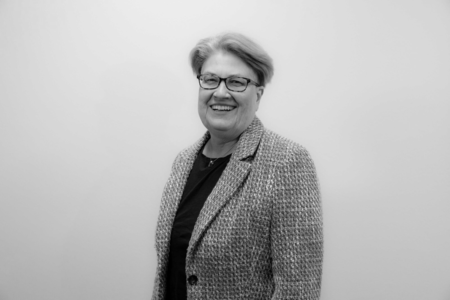
Judith Fiander
CHIEF EXECUTIVE OFFICER
AUSTRALIAN PHILANTHROPIC SERVICES
AUSTRALIAN PHILANTHROPIC SERVICES
When Judith Fiander first walked in the doors of Australian Philanthropic Services her intention was to volunteer for a few months. Fast forward 14 years and she is the chief executive. Eliza Bavin writes.














While there is no doubt Mr Faber is a perma bear with some wild predictions this little gem of yours buts you in no better position Benjamin???
"Not when you consider that the major world central banks' promise to act if necessary to deliver sustainable growth." Oh, perhaps just like how their actions over the past 5 years have delivered such an outcome?
Calling out Faber is one thing, but that little comment alone destroys any credibility you may have had in suggesting your wisdom was any greater.
If / When another significant crash happens it will most likely be as as result of our failure to learn from the lessons of the past and correct the structural issues mainly around debt and moral hazard that have yet to be addressed. Some of the lessons of the past well covered in this week's Economist Magazine see http://www.economist.com/news/...
BB, you are correct! I'm in no better position but ... who is? Not even the IMF, nor the powerful centrak banks themeselves can predict with 100% accuracy.
My opinions are based on how I see the macro fundamentals unfold and the subsequent/consequent policy (fiscal or monetary) actions.
And yes, just like the CB's policy actions over the past 5 years. We could engage in a lot of what ifs -- as in what if they hadn't QE'd? -- but unfortunately economies aren't like test tube experiments that could be repeated and parameters changed.
Right or wrong, economies avoided a much deeper recession (depression?) due to CB money. And look at Britain, easy money and asset purchases have turned speculations of another recession only a year ago to, according to the IMF, an economy that will be the fastest growin among the G7 this year.
I agree with Peter Urbani's comment though -- we can't avoid another crash because of failure to learn from the past and address the rise and rise of debt and moral hazard.
The problem is which government or central bank head would allow to come to pass under their watch?
Thank you for your comments folks.