


Separate risk advisers from other planners: SynchronBY LAURA MILLAN | THURSDAY, 29 JAN 2015 12:05PMA life insurance policy has more in common with car insurance policies than with an investment portfolio and therefore risk advisers should be kept separate from other financial planners, Synchron director Don Trapnell argued. Related News |



Editor's Choice
Future Group to internalise super trustee structure
|Future Group is acquiring WTW's superannuation licensed entity, Stewarda, to establish trustee capabilities in house.
Natixis names chief executive for Mirova
|Natixis Investment Managers has promoted an executive from another affiliate to succeed the outgoing chief executive of Mirova, Philippe Zaouati, effective July 1.
ASIC calls out platform trustees: 'Clear breach of trust'
|ASIC has called out superannuation trustees for not doing enough to protect retirement savings of Australians on platforms even after repeated warnings from regulators about the dangers of poor oversight.
HMC Capital wins $1.3bn private credit insto mandate
|HMC Capital has won two global institutional mandates of $1.35 billion for its private credit strategy in Australian commercial real estate (CRE) lending.

Products



Expert Feed


When geopolitics becomes a portfolio risk
Geopolitics is back - again - and Australian investors can no longer treat it as distant background noise.

Does association membership still matter?
With all the changes the advice sector has experienced in recent years, such as regulatory reform and increased education and professional standards ...


Digital assets and where they stand in 2026
So far in 2026 digital assets have captured the headlines largely for the wrong reasons, but that doesn't tell the full story.

Rethinking default design in a changing market environment
The evolution underway in the US DC system highlights the value of periodically reassessing default design assumptions.
Featured Profile
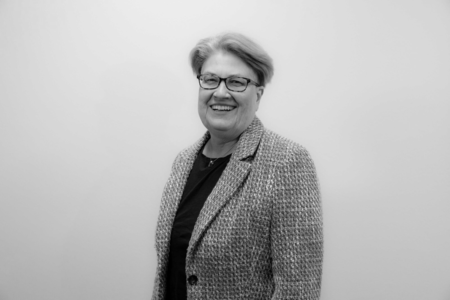
Judith Fiander
CHIEF EXECUTIVE OFFICER
AUSTRALIAN PHILANTHROPIC SERVICES
AUSTRALIAN PHILANTHROPIC SERVICES
When Judith Fiander first walked in the doors of Australian Philanthropic Services her intention was to volunteer for a few months. Fast forward 14 years and she is the chief executive. Eliza Bavin writes.














Don Trapnell is one of the most respected people in our industry. I'm not part of Synchron but I have always admired Don's work from a distance. When he speaks I listen and I think a good percentage of advisers may agree.
Don's comments in the article are indeed important and I agree wholeheartedly with him. I truly can't understand why we haven't seen this separation of licences already. It is probably because it is simple common sense and we all know how much that means in the pluto-world of politicians, ASIC and other wanna-be's.
We are part of Synchron, unlike Brian above. Yes, it's true that we risk advisers aren't financial planners per se.
Still, the public has a perception which doesn't (or can't) sometimes differentiate, so we do need a working knowledge of financial planning and tax knowledge as it applies to life-risk insurance and superannuation.
And yes, we do on occasion have to deal with perceptions - like it or not. To illustrate: cabinet makers and carpenters are very similar disciplines, but they're two different trades.Similarly, planners are different from life-risk writers, therefore it makes sense to license them separately.
I am perplexed as to why a qualified adviser should not have the lot (Risk and financial planning) in order to competently meter clients circumstances, sufficiently weigh different options before framing meaningful solutions/ strategies/ advice.
In line with FOFA's desire to streamline and simplify advice for Australians, the majority of whom are yet to seek advice, splitting advice areas concerns me.
Given many Australians harbour considerable mistrust about advisers and the advice industry for a variety of reasons including many not knowing what advice to seek, inability to distinguish what constitutes good advice or adviser. Fragmenting advice into risk or financial planning instead of unifying it under one mandatory competency guideline for all advisers, could further entrench the public's fear. Many risk insurance only clients I have spoken to thought they received financial advice! But Which financial advice?
A client recently told me she was terrified of seeking advice because it is such a mine field of variables: who to trust, what advice to seek, appropriateness of advice, at what cost, would the adviser actually care for her beyond what's driving the adviser.
I see no contradiction between risk and financial planning with the exception of client directed advice or execution only advice. Every risk client should have a financial planning discussion and financial planning clients aught to entertain a risk discussion where applicable.
One uniform competency guideline for advisers will help repair the public's trust, just like a dentist is a dentist and not just for a particular set of teeth or a full mechanic and not one specialising in just one part of a car engine.
Advice recipients could end up with insufficient advice from risk-only advisers or financial planners who might fear referring clients to other advice specialist for fear of losing clients. If we are serious about repairing the intractable perceptions that prevail about the industry we have to fix this.