
Newspaper icon
The latest issue of Financial Standard now available as an e-newspaper
READ NOW

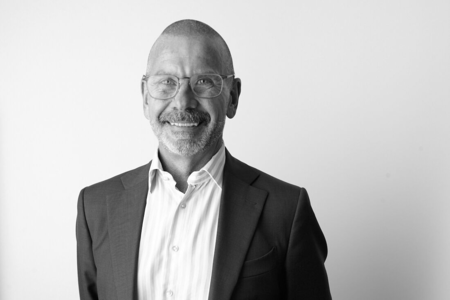
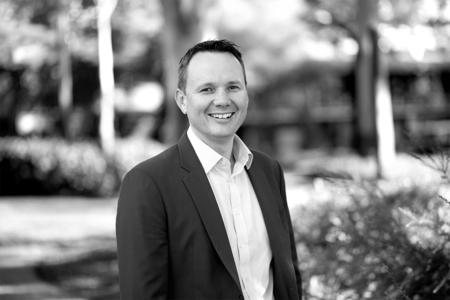
Featured Profile: Hugh Killen

Shaped by resilience
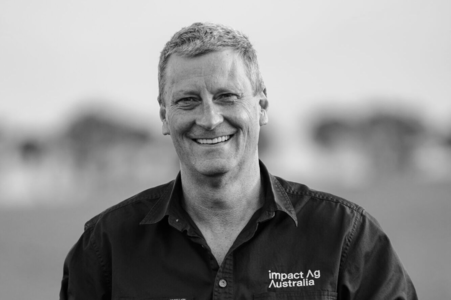
For Hugh Killen, several life lessons came from spending time on pastoral properties stretching across northern New South Wales and South-West Queensland.
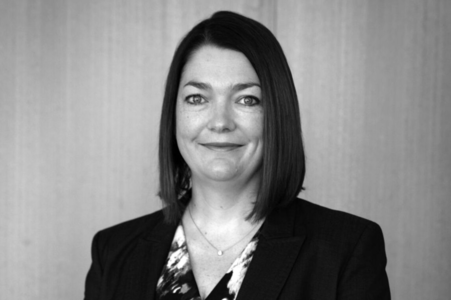
For Hugh Killen, several life lessons came from spending time on pastoral properties stretching across northern New South Wales and South-West Queensland.

Born in Narrabri and raised among cattle stations and farms on the New South Wales- Queensland boarder, Killen describes himself as a typical bush kid. The kind who spent his childhood riding across paddocks, working alongside adults and developing the self-reliance that comes with growing up far from major centres.

If you can't figure out your purpose, figure out your passion. Your passion will lead you to your purpose.
"It was a very idyllic upbringing," he says. "The imprint of agriculture, I think, gets very much encoded into your DNA from an early age."

Today, Killen is managing director and chief executive of Impact Ag Australia, a specialist investment manager focused on agriculture, natural capital and climate solutions. Yet his path to that position was anything but conventional.

For more than two decades, Killen built his career in global financial markets, working across Australia, London and North America. He studied at Harvard Business School, navigating the aftermath of the Global Financial Crisis (GFC) and led large teams across international banking institutions.

However, finance was never part of some grand career plan. In fact, Hugh says he fell into it "purely by chance."

After finishing school, Killen intended to spend a gap year working as a ringer in the Northern Territory. His father had other ideas.

"He said, 'You've grown up doing that. Why would you take a year off to do more of it?'" Killen recalls.

Instead, his father encouraged him to stay in Sydney and find work in finance while continuing his rowing commitments. Killen wrote to every firm with a seat on the Sydney Futures Exchange. Most never replied, except one.

Elders Finance Group offered him a junior role on a foreign exchange trading desk. He accepted, despite having little idea what the job involved. That decision would shape the next chapters of his life.

What followed was a career spanning some of the most transformative periods in modern financial markets. He witnessed the evolution of electronic trading, worked through the GFC and eventually held senior leadership positions managing large teams and businesses.

Yet throughout those years, agriculture never drifted far from view.

"I loved every moment of it," he says of his finance career. "But it was never really my identity."

A pivotal moment arrived later in his career when then-Westpac chief executive Gail Kelly supported his application to attend Harvard Business School. Killen describes the experience as transformative.

"It changed my life. It opened me up from thinking purely about financial markets to thinking about business more broadly," Killen says.

The shift ultimately led him back to agriculture.

After leaving banking, Killen joined the Australian Agricultural Company before eventually helping establish Impact Ag Australia, bringing together two worlds that had defined so much of his life: finance and farming.

Today, those worlds intersect through a concept he believes is still wildly misunderstood: natural capital. For many investors, environmental outcomes remain separate from commercial performance. Killen sees them as deeply connected.

He often speaks about what he calls the "natural capital balance sheet", the environmental assets underpinning every agricultural business.

While traditional balance sheets capture debt, revenue, assets and liabilities, the natural capital balance sheets, he explains, includes soil health, biodiversity, water systems and ecosystem function.

"If you can manage that natural capital balance sheet in a way that's beneficial for the land, you end up with a farm that's more productive, more resilient and ultimately more profitable," says Killen.

The idea sits at the centre of Impact Ag Australia's investment philosophy. The firm manages agricultural assets across Australia and develops opportunities in carbon, biodiversity and other environmental markets.

For Killen, these aren't separate activities. They are different expressions of the same objective. Healthy soils produce healthier businesses.

The concept becomes particularly important as investors increasingly seek exposure to agriculture, climate adaptation and long-term structural themes.

Yet Killen believes agriculture is still often misunderstood by institutional investors.

Many focus heavily on production outcomes while overlooking agriculture's role as a long-duration asset capable of delivering diversification, inflation protection and capital growth.

"Some systems are designed to maximise output under favourable conditions. Others are designed to maintain function across a wide range of conditions," he says.

For decades, resilience has been celebrated as one of Australian agriculture's defining strengths.

Killen views the concept differently. He previously wrote in an article that: "There comes a point where resilience stops being a strength and becomes a warning sign."

The distinction matters as volatility shapes investment decisions.

Capital, he argues, does not deploy on potential. It deploys on predictability.
The more uncertainty exists within a system, the more difficult it becomes for investors to commit long-term capital.

That belief influences how he thinks about everything from energy policy to regenerative agriculture. The debate between conventional and regenerative farming often becomes polarised. Killen sees a simpler question beneath it. Some systems are built to maximise production under ideal conditions. Others are built to remain functional through a wider range of conditions.

"The real issue is structural," he says.

For investors, consistency often matters more than peak performance. That perspective reflects a broader philosophy that extends beyond agriculture. Killen reiterates the importance of purpose.

Whether discussing farming, leadership or investing, he sees purpose as the foundation from which everything else flows.

"If you can't figure out your purpose, figure out your passion," he says. "Your passion will lead you to your purpose."

It is an idea Killen applies not only to himself but also to the businesses he leads. At Impact Ag Australia, that purpose centres on what the company describes as "accelerating agriculture that activates the power of nature".

On top of leading a growing investment platform, Killen remains firmly grounded in rural Australia, spending as much time as possible around horses, particularly in the cutting horse community. His connection to horses runs deeper than recreation. They provide perspective.

They remind him, Killen says, that many of the problems that seem overwhelming in business are often smaller than they first appear. "They humble you," he says.

That humility perhaps explains why, despite an accomplished career spanning global finance, agriculture and sustainable investment, Killen speaks most proudly about the team he is building today. Australia, he believes, possesses everything required to become one of the world's leading agricultural investment markets.

"We have the capability. We have the capital. We have the opportunity. What we're really deciding now is whether we're prepared to align them," he says.

For all the complexity of global capital markets, carbon accounting and agricultural investment, Killen's perspective ultimately returns to something much simpler.

Whether he's speaking with international investors, walking a farm or spending time with his cutting horse Nina, the lesson remains the same: sustainable outcomes come from strong foundations.

It's a philosophy shaped by a childhood in the bush, refined through decades in global finance and grounded by a deep connection to the land.

As Australian agriculture faces mounting pressure from climate, energy and market volatility, Killen believes the sector's future will depend not on becoming more resilient to shocks, but on redesigning systems to carry risk more effectively.

"You impact the world, the environment and the people around you every single day you get out of bed," he says.

For Killen, that responsibility extends far beyond the farm gate. FS