

FEATURE | Member engagement | On the ballBY KARREN VERGARA | TUESDAY, 23 JUN 2026 9:10AM When it comes to superannuation, Australians traditionally follow the path of least resistance. When a pot of gold feels 'so far away' members tend to adopt a cavalier attitude and habitual disengagement and, instead, dismiss it in the 'too-hard basket' to prioritise more immediate, pressing life issues such as saving up for a house or investment property. A Colmar Brunton (now Kantar) survey from 2010, for example, found only one third of employees chose their own super fund. Young people were also three times less interested in their personal superannuation affairs compared to older people. Only one-fifth of young Australians were interested in such matters compared to three-fifths (58%) of members aged 45 years or older. Numerous surveys like this come to the same conclusion: the engagement gap is real. A 2023 research paper from Melbourne University classified the engaged versus non-engaged as "insiders" and "outsiders" respectively. Outsiders typically do not read statements or understand investment options and fees. They do not make efforts to calculate their retirement needs, like use online calculator tools and rarely make voluntary contributions. Insiders, by contrast, are highly engaged across the aforementioned metrics, with voluntary contributions said to be "arguably the most important indicator of engagement." Interestingly, this cohort was more preoccupied with their property investment compared to their super. More recent pulse surveys, however, show the tide is shifting. After 34 years of a compulsory pension system and with $4.5 trillion at stake, it has taken a generation to start showing real interest. Investment Trends' 2025 Super Member Engagement Report found member sentiment is strengthening thanks to trustees' intensified focus on communication and service beginning to translate into measurable gains. Industry-wide Net Promoter Score (NPS) rose sharply, climbing 15 points from -19% in 2024 to -4% one year later. Member satisfaction also improved, edging up from 66% to 68%, with retail funds narrowing the gap on their industry fund counterparts, though the latter continues to lead on satisfaction overall. The report also highlights the continued importance of advertising in driving engagement and growth. Some 6% of existing members - equivalent to one million Australians - said advertising prompted them to think more about their super, while 5% of new members, or roughly 51,000 people, were influenced to open an account. The results showed advertising is not just about visibility, but a way for funds to communicate their value, shape perception and drive action. The outlay in advertising seems to be paying dividends. The uptick is evident in APRA tracking promotional-type expenses for the last financial year: super funds spent $339.9 million in total on marketing and advertising, jumping 21% from two years ago. Sponsorship expenditure totalled $32.5 million, up 2% year on year. Compared to FY23, sponsorship expenditure went up by 11%. Compared to four to five years ago, Investment Trends research director Julian Cappe says while member engagement has improved, overall, it is still quite low. "One key issue with surveying engagement is self-selection. Those who respond to surveys are, by definition, the more engaged members. Any survey, in general, reflects the views of relatively engaged members rather than the very passive majority," he says. "The good news, though, engagement is increasing. People are becoming more aware, and switching behaviour is rising." Members' uptake on financial advice and SMSFs launching are also trending up. "Fewer people are receiving financial advice than before, but those who do are more likely to switch funds. Advice is often sought at key life stages - mid-life or approaching retirement, which can trigger switching. Meanwhile, SMSF establishment rates are at record levels, which also reflects increased engagement," Cappe says. Plugged in Before moving to the superannuation industry, Brighter Super chief member officer Lisa Kay used to work in a bank, helping customers apply for home loans. One piece of financial information the bank assessed was their superannuation balances, which Kay noticed was often larger than their deposits. Kay recalls that customers, at the time, rarely expressed engagement or interest in their super. "People don't engage with super because it feels so far away. You can't picture your future-self, so it doesn't seem important. Then one day you wake up, roll everything together, and realise you've actually built a meaningful balance - and start asking, 'Why haven't I paid attention to this?'" Kay says. Casting her mind back 10 to 15 years ago, Kay says the industry was not strong at engaging members and could be described as "sleepy". "But that's changed now. Funds are far more engaged and recognise their responsibility to help members achieve a comfortable retirement," she says. "Super funds have woken up to the responsibility that they are amazing conduits between the member and their retirement that looks comfortable and will deliver what they need." As chief member officer, Kay oversees growth, marketing, stakeholder and corporate relations, and a group of about 1700 independent financial advisers. Part of her job is centred on understanding member behaviour - when they're most likely to act and what prompts them to engage with their super. "We've designed member journeys that include communication and advice pathways, ensuring we support members at the right time," she says. "A big part of my role is feeding member insights back into product, operations and strategy, so we can continually improve what we offer." Over the years, the role of chief member officer has taken more prominence in the executive ranks, taking responsibility for the end-to-end member experience, pushing for ways to help members engage and stay engaged with their super. One key responsibility of the chief member officer is directly interacting with members - meeting them where they are at in their superannuation journey - and often travelling around the nation to understand their needs and challenges. Simone Van Veen, the chief member officer at Rest, says her role is to be the voice of more than two million members. "It's about understanding our members and ensuring the products and experiences we deliver are relevant, simple and easy for them to act on," she says. "I feel incredibly fortunate in my role because it's fundamentally about understanding people and helping them build their best financial future." Van Veen's team is responsible for ensuring members have a seamless experience across all touchpoints - whether that's digital services, communications, or accessing support whenever they need it. "Engagement is much broader than advertising. It isn't one-size-fits-all - it means meeting members where they are," she says. Nowadays, engagement ranges from the use of retirement calculators to scrolling through reels on social media channels like YouTube and Instagram. Rest appears to have captured a young audience on TikTok with more than 12,000 followers. Some of its TikTok shorts have generated more than 4.5 million views. "Many of our members engage through our Super Simple Chats on social media. These digital channels have been highly successful, with over 11 million views of short, bite-sized educational content designed to simplify complex topics," Van Veen says. "Engagement is also about how we communicate and deliver services. We aim to remove friction, provide clear information, and offer both digital and human support. Some interactions are best handled digitally, while others require a human touch." Kay sees financial literacy improving, particularly in the context of superannuation, with more parents imparting some of their wisdom in this space to educate their children. But more needs to be done. "We need to think about how we could engage people at a younger age, or how can we teach more Australians about superannuation? It could start in the classroom, schools and universities," she says. "Simple actions like salary sacrificing early can make a huge difference over time. It's about embedding good habits early, because the power of compounding can deliver significantly better outcomes in the long run. "True engagement is when members move from awareness to action, such as attending a seminar, seeking advice and then implementing that advice. That's where we see real value." Total improvement ASIC's scathing review of the death benefit claims-handling process released in March 2025 found not one trustee tracked the life of a claim from start to finish. Among the major trustees, ASIC uncovered excessive delays and poor service, gaps in trustee data and reporting, and inconsistencies in some trustees' processes and procedures. Communication and engagement with beneficiaries were often "ineffective and insensitive". One super fund was accused of showing "zero compassion" to a family struggling to facilitate an insurance payout for a terminally ill loved one with weeks to live. Cbus and AustralianSuper made headlines in this department. Cbus paid a nearly $24 million fine for the lengthy delay of death benefit payments. AustralianSuper was accused of sitting on death benefit claims that exceeded internal targets of four months. ASIC unveiled its follow-up report in June, finding little to no meaningful improvements were made among 45 trustees. Two years on, trustees exhibited varying degrees of urgency in responding as most took steps to uplift their practices and are committed to taking further action, but others took no action at all. ASIC commissioner Simone Constant said: "Unfortunately, despite complaint numbers and trends rising overall between 2020 and 2026, early findings indicate that five of the 10 trustees we are reviewing have not identified a single systemic issue from analysis of their complaints data over our review period." "At least one trustee failed to analyse their complaints data at all. This is baffling, and frankly, unacceptable." On a brighter note, internal complaints related to death benefit delays dropped by 53% from early 2024 to late 2025, while external dispute resolution complaints reduced by 72%. "Fund members have a right to expect claims will be handled efficiently, honestly and fairly - this is an obligation for trustees under law," she said. "ASIC will consider the full range of regulatory tools at our disposal, including enforcement action, if trustees fail in this crucial obligation." This article is featured in Financial Standard's fortnightly newspaper. To keep reading, click here. To subscribe, sign up here. Related News |


Editor's Choice
Global X awards mandate for ETF business
Bell Asset Management launches small-caps fund
Former Australian Ethical finance chief lands new gig
MySuper assets pursue $1.5tn Choice sector

Products



Expert Feed


When geopolitics becomes a portfolio risk

Does association membership still matter?


Digital assets and where they stand in 2026

Rethinking default design in a changing market environment
Featured Profile
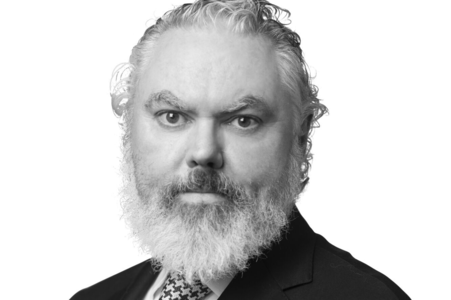
Brian Redican
NEW SOUTH WALES TREASURY CORPORATION