


FEATURE | Custody | Worlds collideBY KARREN VERGARA | WEDNESDAY, 28 OCT 2026 10:29AM When ETF Shares chief executive Cliff Man was a junior portfolio manager at Hang Seng Bank, a subsidiary of HSBC, early in his career, many of his duties mirrored the tasks of a custodian and fund administrator. He reconciled daily cash balances and positions, gathered market data and verified valuations. The fund administrator would supply the accounts and calculations, while the funds management side would effectively perform the same checks and balances to ensure the calculations were correct before signing off on daily reporting. It was a valuable experience for Man who would later transition to front-office roles, drawing insights and experience from the inner workings of the back office - the engine rooms of the financial services world that make the flow of money possible. "Compared to back in the day, when things were much more manual, the process is now far smoother. There's still some human involvement, but a lot has been automated," he says. During Man's days at Global X and its custodian HSBC, if trade volumes increased by, say, 30%, there'd be some delays in receiving net asset value (NAV) reports. These days, things run much more smoothly. "We receive reports on time pretty much every day. Occasionally there might be an ad hoc check that needs to be completed, but if we want to launch more funds, the automated processes used by modern custodians are actually quite good," he says. Pressure is building in Australia to make this process even more seamless and faster: a move to a T+1 settlement cycle will keep us in line with the US, Mexico, Canada, India, Argentina, Pakistan and Nigeria. While Australia has a long runway to T+1 of around 2030, local stakeholders, particularly custodians, still have their work cut out for them in keeping pace with a patchwork of global settlement timeframes. "When the US moved from T+2 to T+1, the industry had to scramble a little because it introduced an extra operational step," says Man. While adding another step to every transaction can create complexity, he believes the industry has largely adapted. "Initially, some firms experimented with different models. For example, some tried keeping broker settlements on T+2 while ETF units settled on T+1," he says. "Eventually, the market converged on the current approach, where authorised participants effectively bridge the funding gap and price that cost into spreads or ETF creation and redemption activities. "Otherwise, brokers would have to provide the funding themselves, and that can become quite expensive. Over time, the industry has generally moved toward a more consistent model." Northern Trust global head of client solutions for asset servicing Gerard Walsh says the shortened settlement times impact all market participants at every point in the lifecycle of a trade decision. Trading price is perhaps the most straightforward component, electronic and relatively seamless, such as buying a million dollars' worth of shares. "It's the daisy chain of events that happen after that that investment managers in this part of the world will need to watch out for, particularly the cut-offs around trade-related FX," he says. A super fund, for example, selling out of an Australian mining stock settles on T+2. But it also wants to buy Denmark's Novo Nordisk at the end of the week. In this ever-shifting settlement cycle, Walsh emphasises the need to prepare for a funding gap and trade-related FX requirements - thinking well ahead about the need for instruments such as derivatives, overdrafts and lines of credit. "Everything is available at a price, and the price shoots up if you've got an emergency," he explains. Such creeping costs can potentially materialise and escalate. A poorly timed trade-related FX arrangement, for instance, may come at a higher cost than if the transaction had been planned properly. Walsh has also seen certain behaviours among portfolio managers from around the world change upon realising they "had to have their jigsaw puzzle absolutely buttoned." "Those funding gaps are the things to watch for that period where there's the settlement cycle mismatch between [Australia and] the rest of the world," he says. In the event Australia does not transition to T+1 by 2030, Walsh urges local investment managers to plan for a funding and cash management gap that could last close to half a decade. "It's a long time for a portfolio manager to operate, knowing and understanding that placing a large trade on a Thursday raises the cost of that trade," he says, meaning this would require careful planning and considering executing the trade earlier in the week, perhaps on a Tuesday or Wednesday. Rising costs are also a meaningful factor that Richard Carleton, the chief executive of the Canadian Securities Exchange, who highlights this ever since Canada went live with T+1 two years ago. He warns exchange operators outside the US that shifting to T+1 will be a challenge, and many will be forced to do so. "It will probably increase our costs and certainly increase the costs of investment dealers that connect to our systems," he says, adding that the appetite for a shortened timeframe is primarily for the Magnificent Seven and other major US stocks. "If the ASX trades 24 hours a day and Cananda goes 24 hours with some of its big-name stocks like Royal Bank and Shopify and so forth, frankly, nobody's going to care," he told the recent Stockbrokers and Investment Advisers Association Conference. "But if we don't go 24 hours, we're looking at a scenario in two to three years where the big US exchanges operate nearly 24 hours a day." That day may come sooner than expected. In a momentous move, Nasdaq will enable a 23-hour trading day, five days a week on December 26 in a bid to "meet rising demand for US equities across the globe" as well as "broaden investor access, expand wealth-building opportunities, and redefine how markets function." Carleton notes another important component of round-the-clock trading is that DTCC, the clearing and settlement system in the US, is taking steps to clear on a T+15-minute basis. "Canada will likely remain on T+1 and Australia will be T+2 in the foreseeable future," he notes. "As exchange operators, we're going to have a heck of a time keeping some of our larger stocks that might like to take advantage of that 24-hour liquidity at home. Furthermore, it will be a costly struggle for us to offer a comparable service." ASX acting group executive for securities and payments Andrew Jones chimes that there are only a relatively small number of stocks that investors would actively want to trade overnight. "We also need to be realistic. We're not the US. We don't have a population of 350 million people spread across multiple time zones. "Our liquidity fits nicely into the window of existing trading hours. In fact, a significant amount of liquidity occurs during the closing auction, which takes place in the final minutes of the trading day," he told the same event. Jones, however, believes the ASX can support 24-hour trading if it came to it and that it is technically possible. "But as we all know, these decisions are ultimately market decisions. We need to work with everybody and determine whether there's actually sufficient demand," Jones says. Tokenisation: Beyond buzzword Tokenisation is a pointed piece in this narrative. What was once perceived as speculative is now muscling into the traditional world of finance. Stakeholders are also exploring where this piece of the puzzle fits. Jones says: "If we can enable the transacting of stocks outside traditional operating hours via a token, then maybe we can effectively provide 24-hour bilateral matching." This could be the ASX operating during normal trading hours, while another exchange facilitates trading in tokenised versions of those securities overnight. "That's potentially a much more interesting model for Australia," he says, pointing to several tokenisation models emerging globally, such as the NYSE, LSE and NASDAQ operating their own models, while partnerships are developing between crypto exchanges and traditional exchanges around the world. Many would argue tokenised securities could potentially be the next revolution in investing. This article is featured in Financial Standard's fortnightly newspaper Volume 24 Number 20. To keep reading click here. To subscribe, sign up here. Related News |


Editor's Choice
Vale Mark Johnson
Inflation hits 4.3%, RBA says it remains 'too high'
Cbus creates new role for legal operations
Dexus to pay $30m in legal bills for leaked airport data case

Products



Expert Feed


When geopolitics becomes a portfolio risk
Does association membership still matter?


Digital assets and where they stand in 2026
Rethinking default design in a changing market environment
Featured Profile
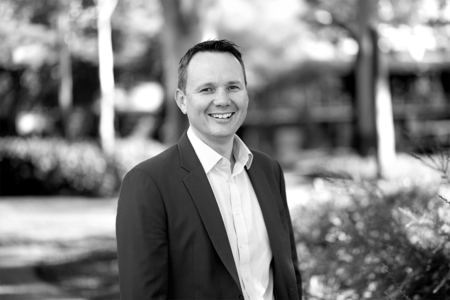
David Sharpe
FINANCIAL ADVICE ASSOCIATION AUSTRALIA





The Financial Standard podcast Tune in each week as we discuss the latest developments in Australia's wealth management industry. |  |