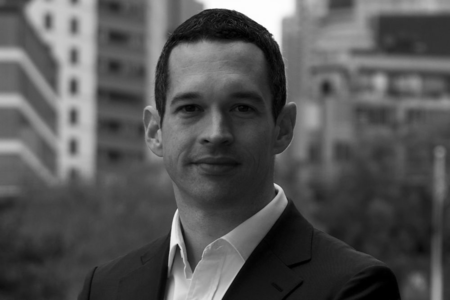

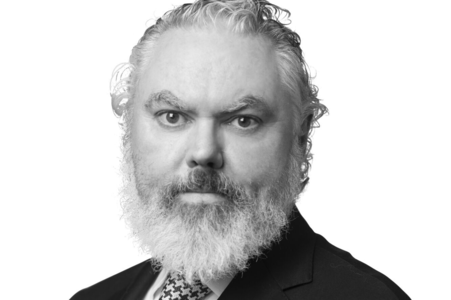
Through the cycles![]() What makes an economist an economist? TCorp chief economist Brian Redican reflects on over three decades of navigating Australia's economic cycles. Riddhima Talwani writes. Brian Redican's journey into economics began in 1989, when he arrived at the University of New South Wales to pursue a bachelor's degree. That same year, young students in Beijing were protesting in Tiananmen Square for China's democratic rights. The 1980s showed that you could actually do it and we reaped the benefits in the 1990s. Redican heard Ross Garnaut, former Australian ambassador to China, on the radio speak on the implications for Australia's exports. The political upheaval could result in Chinese mills abruptly halting purchases of Australian wool and threaten the livelihood of Australian wool farmers.These logical, yet not completely intuitive relations, fascinated Redican. "I just never would have made that connection between this political event in China and a wool farmer in Australia and how they could get affected," he says. Redican was entering a job market as a young economist in a world that was rapidly changing. Australia was moving away from being an insular economy after facing extremely high inflation and unemployment in the early 1980s and starting to integrate with the global economy. In Canada, where Redican was pursuing his master's in economics at Queen's University, copies of Australian newspapers arrived a week late. Looking for job advertisements in the paper, he found his first gig as an economist with the Reserve Bank of Australia (RBA). Soon after he came back to Sydney, Redican was interviewed by David Gruen, now the chief statistician at the Australian Bureau of Statistics (ABS) and started at the central bank a week later. When Redican joined the RBA in 1994, it had just started on its path to target inflation to an average of 2-3% over a period of years. The central bank hoped to stabilise inflation expectations and protect the economy from long-term shocks. Redican recalls this targeting provided an anchor to guide all the analysis he did at the RBA. He was assigned the overseas economy section where his role was to look at the Asian economy at large and how it fed into Australia's inflation. RBA's former head of economic analysis Glenn Stevens, who later spent a decade as governor for the central bank, set the benchmark for Redican on what made a good economist. "He had an incredible focus on getting the details right but at the same time could put those details in the larger story. He never missed the forest for the trees," Redican says. While starting at the RBA, Redican says the focus was really on what was happening in the economy, which would then develop his view on interest rates. By the end of his gig, he says this had almost done a 180-degree flip. He had started focusing more on what was happening in financial markets and letting that guide his view on the economy. This was also the time he jumped ship to Macquarie Bank. Redican notes while his work at the RBA was focused on one area, working at Macquarie Bank allowed him to look at a vast array of things, and provided him the kind of challenge he was hoping for professionally. "You're dealing with the property market and commercial property, and there's FX traders, and then there's equity investors and fund managers and hedge funds. It's much more diverse in that sense," he says. He worked with these different players and fed his forecasts for currencies, interest rates, growth, profits margin for them to make their commercial decisions. This, he says, allowed him to understand different perspectives about what drives business, and in turn the economy. Leading up to the global financial crisis (GFC) in 2007, Redican says working with the bank benefited him with insights which he would have missed had he stayed at the RBA. He recalls his equity strategy colleagues, Neale Goldstein-Morris and Tanya Banwhite, raising concerns over the buoyancy in the equity markets as the debt market was starting to seize up. "Neale and Tanya were just saying, well, if the financing is drying up, the balance sheets will need to be repaired and you can't sustain these equity valuations," he recalls. Redican notes, while it was clear there was going to be a downturn at some stage, it was a real surprise for everyone when US policymakers let Lehman Brothers go broke. "And suddenly it went from what could have been a manageable downturn to a crisis kind of overnight," he says. The impact of the GFC on Australia was more benign supported by a dexterous central bank cutting rates very far and very quickly, a responsive fiscal policy and continued support from exports to China. "As the economy developed, rates steadily fell. There were still cycles, but every peak in rates was below the previous peak, and every bottoming of rates was below the previous one," Redican says. In 2014, Redican was ready for another challenge - this time taking the role of the chief economist at the NSW Treasury Corporation (TCorp). While the role provided the benefit of being more family friendly, Redican was also interested in moving from the sell side to the buy side. Working for the people of NSW was also an attraction. TCorp finances the NSW government by issuing bonds along with managing its "We kind of think of it as two businesses there, and the economics team really sits in the middle, we work with both teams," he says. Redican says the real advantage of an organisation like TCorp has been its closeness to the markets and the ability to gain insights into what's going to happen to funding costs. During the COVID-19 pandemic, as global markets shut down, Redican recalls TCorp was inundated with requests for support and questions about what's going to happen to the economy and the government's policy response. "What's the impact likely to be? It's really all hands on deck. Think about scenarios. Are they likely? Are there ways to circumvent them? Heading them down that path. It was a total blitz at that time," he recalls. The post-pandemic world has been shaped by repeated price shocks on supply chain disruptions and geopolitical conflicts. Redican says we are slowly moving into a very different world to the one he has seen in the last 30 years as an economist. He sees the Australian economy being driven by government policy, all pointing to the direction of more government borrowing and inflation prone spending that central banks cannot control. In a world of repeated global price shocks, Redican questions whether inflation averaging at 3.5% may become the new reality, rather than continuing to target it at 2.5%. He advocates moving towards a more "holistic" policy setting and an economy driven by innovation. "The 1980s showed that you could actually do it and we reaped the benefits in the 1990s," he says. "I think there are things we could be doing at the moment. They seem insurmountable hurdles to overcome but when the time is right maybe we do get them in place. And start to see a lot more innovation come true." And for Redican personally, he sticks to one rule when putting his analysis out - would he be happy if Glenn Stevens read it? If yes, it's ready for the world. fs

![]() Proudly independentAt Koda Capital, head of research Jason Coggins and the investment team go the extra mile to put clients first. He tells Karren Vergara how they do so ... ![]() Telling it like it isThere is perhaps no greater critic of Australia's financial advice industry than Connect Financial Service Brokers chief executive Paul Tynan. At the ... ![]() Employee number 10From ironing Adidas labels on jerseys as a teenager to running Northern Trust's business in Australia, Angelo Calvitto has come a long way. He talks to ... ![]() Value in the journeyAspiring lawyer turned global equities portfolio manager, Garry Laurence recently notched 10 years at Perpetual. He tells Darren Snyder about life as ... ![]() High tech returnsPraemium managing director Michael Ohanessian went from project management at Mobil Oil to running a biotech company and eventually spearheading the growth ... ![]() Employer of choicePaul Hennessy's longstanding connection with Capital Group began more than 20 years ago, way before he led the Australian expansion as managing director. ![]() A fresh perspective on adviceWhen Shawn Blackmore joined AustralianSuper in December 2007, the fund was just getting started. The group executive of member experience and advice tells ... ![]() The science of retirementAlva Devoy went from studying molecular engineering to running the Australian arm of Fidelity International - and she has a clear vision for the future ... ![]() Ratings successMorningstar APAC director of manager research Tim Murphy tells Karren Vergara how the firm is helping end investors meet their goals more effectively. ![]() Playing a humble gameConceding he grossly underestimated what it takes to establish a funds management boutique, two-and-a-half years later Aitken Investment Management chief ... |



Editor's Choice
Federal Court calls out ASIC for re-running case on appeal
|Evergreen founder exits Ascalon Capital
|Powerhouse Ventures partners with European fund manager
|KeyInvest unveils new investment platform, awards mandate
|Products
Featured Profile

Brian Redican
NEW SOUTH WALES TREASURY CORPORATION