


Showcase: Staying true to alphaBY THE FINANCIAL STANDARD TEAM | WEDNESDAY, 11 NOV 2026 9:56AMWhen AI drives the market, diversification needs a different engine. Australian investors are fluent in the language of market concentration risk. For most of the last two decades, banking and resources stocks have each made up around a quarter of the ASX200 weighting. That top-heaviness has ebbed and flowed but never gone away, so when financial advisers and their clients set out to diversify out of local shares, they invest in global equities. Doing that now has posed a new problem: the top 10 stocks on the S&P500 are dominated by the tech giants - and the stakes are much higher. So for investors who want a counterweight to their passive exposure and to lower their momentum-driven risks, there's an answer: a fresh look at bottom-up stockpicking. When the wheels come off Matt Jones, portfolio manager of the Fidelity Research Global Equities Fund, explains the magnitude of the problem. "If you look at the S&P500 or MSCI All-Country World index, your top 10% of contributors to the last 12 months of returns have delivered over 120% of the returns, in some instances. So you get this concentration risk in portfolios that you might not even be aware of. That means a value portfolio, a passive portfolio or growth portfolio might all have the same underlying drivers of returns, and that's a big risk." For example, you might invest in a growth fund that becomes heavily tied to momentum or AI-driven growth, or an infrastructure fund that's also in AI. Unless you're monitoring those on a daily basis and adjusting your portfolio positioning as you go, you might get some big bets and some big risks in your fund that you weren't aware of," says Jones. He explains that the risks are hidden specially if you're not actively looking for it. "It's a really interesting moment in the markets right now. Traditionally, if I hold 'x' number of names, maybe between 50 and 70 names, I'm diversified. I hold them across different industries and sectors." He continues, "But when you've got a big, huge underlying theme like AI, now you could own an energy company, a pure energy company, a utility company, an industrial company, and a semiconductor company, and they're all betting on the same thing." That means when the markets are strong, they obscure that big bet, which can potentially lead to big losses later. "When the market rotates away from those bets and views, that's where you could take a lot of pain." U-turn on past performance There's a rule of thumb in investing about performance data. While investors understand that past performance is not a guarantee to future performance, it takes an even more defined meaning today with markets in frequent rotation. It could be rotation due to interest rates and shifting between growth and defensive sectors or it could be rotation due to sector sentiment. On a more personal level, there's a different kind of rotation underway. In Australia and all over the world, a huge wave of investors are moving into retirement, affecting income needs and sectors that will enjoy huge demand. All of those affect how the market performs and how they play out together is something past performance can't reliably predict. "So past earnings don't necessarily reflect the earnings into the future. What you then need to do is some forward-looking deep fundamental research to assess the past performance, look into the future, speak to management suppliers, look at what's going on in the world to then see if the pricing of the stock now is relevant to those numbers or if it's disconnected." "And again, for some companies, do they have enough cash flow to cover the debt burden coming with their balance sheets? So I think the discussion with financial advisers are broadening. On diversification, it's not only at the stock level but at a top-down portfolio level and the combination of the two," says Jones. Not on Zoom, please Fidelity's signature strength - and one that few can match - is its deep in-house research. On its website, it reports Fidelity analysts conducting more than 20,000 company meetings every year, averaging one analyst meeting with company management every 10 minutes. And they're not on Zoom or Teams either. Fidelity analysts can be a step ahead of the fund's competitors by finding out first what an email or online meeting won't reveal. For Jones, this is the added edge of the Fidelity Research Global Equities Fund. "We have 120 professionals sitting out there all across the world doing deep fundamental research. And when you've got 120 individuals, maybe covering about 20 companies each, you end up with 2,400 stock ideas." "You need to apply some structure and process around that to shrink it down to an investible higher conviction set that you think will generally outperform the market more than it wouldn't," says Jones. That includes looking at the company's buy-and-sell ratings and quantifying some of that information to help him narrow the portfolio down to around 70 to 80 names. The systematic component of the fund's process becomes critical in uncovering real alpha. "We have to apply strong portfolio construction around that 70-80 stocks because what we want to deliver is that pure idiosyncratic alpha source from our research team. We don't want to deliver a value alpha source or a growth alpha source or an AI alpha source." Uncorrelated alpha Jones admits that's the hardest part of his job: taking that comprehensive, in-person and unique output from the analysts and shrinking them down to a higher conviction set. "Everything comes back down to the basics of finance and what you're looking for is diversification. And specifically, with Fidelity, it's looking for an uncorrelated, idiosyncratic alpha source. That approach adds the risk diversifier and alpha diversifier to the underlying portfolios that an investor might already hold." Looking towards the investment opportunities ahead, Jones says, "This is the most exciting market I've seen in my over 30-year career in equities and finance. The rapidly changing and rotating market requires some forward-looking and you definitely can't rely on the past." That means the rear-view mirror tells investors little about the road ahead. For Jones, it's about knowing when to accelerate and when to brake, reading the new signs and new roads as they appear, guided by an enviable set of instruments on the dashboard. Brought to you by Fidelity. |


Editor's Choice
Yarra Capital acquired by Canadian asset manager
Private credit under fire again, widespread failings persist
MLC Expand taps private equity owner's US network on AI
ETF Shares launches data centre ETF

Products



Expert Feed

When geopolitics becomes a portfolio risk
Does association membership still matter?


Digital assets and where they stand in 2026
Rethinking default design in a changing market environment
Featured Profile
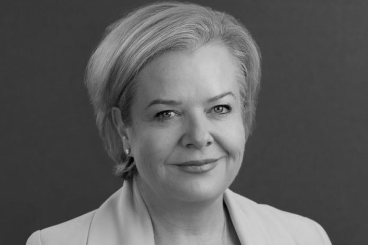
Jacqueline Fernley
ARC POINT OCIO PTY LTD




The Financial Standard podcast Tune in each week as we discuss the latest developments in Australia's wealth management industry. |  |