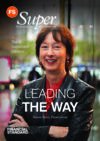


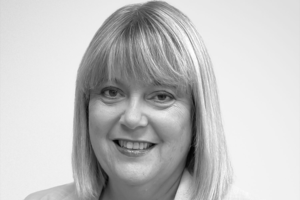
Right place, right time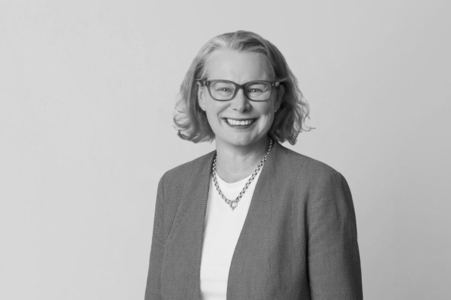 Liza McDonald would have you believe her path from a legal secretary to the head of responsible investment at Aware Super was a matter of good fortune. Her career says otherwise. Riddhima Talwani writes. Riding motorbikes through the Sunshine Coast hinterland, jumping on trampolines, picking up stray golf balls and selling them - these were just some of the ways Liza McDonald had fun growing up in Eumundi, inland from Noosa.
Life there, she says, felt worlds away from the coast, where most people spent their days enjoying the beach."You did what you could to amuse yourself with," McDonald quips. My hope is that the future of ESG is that we don't even have to give it a term, and it's just part of what we actually do. Nothing quite prepared her for Melbourne then, when she visited a friend who had moved there for work."I was absolutely amazed that you could get pizza delivered to your house at 11pm at night, because on the Sunshine Coast everything shut on a Sunday and then everything shut at 6pm on a weeknight. There wasn't a lot that you could do," she recalls. McDonald was sold. Within a year, she packed up and moved down to Melbourne. "I would say the coast was a great place to grow up, very different to what it is now," she says. "But it was also when we came down to Melbourne and just what was at your doorstep in terms of culture and everything in the city was a big drawcard. Just loved it." She started out as a legal secretary at Jacques Martin, the superannuation administration and consulting arm of Colonial Mutual. "I didn't study law, but I had just worked in law firms after leaving school, so I landed a role there and was fortunate enough," she says. McDonald spent over nine years with the firm, moving through five different organisations as the industry consolidated around her. Jacques Martin was sold to NSP Lewis, which merged with Buck Consultants to become NSP Buck, before being acquired by Mellon Admin & Consulting and eventually sold to Mercer. She worked across trusteeship and legal, before joining Health Super nearly two decades ago as a compliance analyst. As McDonald was finding her feet, the industry was changing fast around her. The landmark 2007 Simpler Super reforms made superannuation benefits tax-free for Australians over 60 and stripped back years of complex contribution rules. "I can assure you it was not simpler super for anyone who was actually trying to implement all of the regulations that had come through, and we needed to embed them into the business," she reflects. At the same time, she was slowly getting pulled into working with the investment team, helping with the compliance side of their investment mandates, including proxy voting and governance. "I had the opportunity to work a little bit more with them and help them out with all their regulatory requirements, and it morphed into more and more. 'Can you do this? Can you do this?'" she says. The other big wave of change came in the form of the UN Principles for Responsible Investment. Health Super signed the UN PRI in 2008. It was a turning point. Health Super needed someone to put the principles into practice and to integrate the environmental, social and governance (ESG) factors into the investment thinking of the super fund. McDonald was asked to move into the investment team permanently to lead this work. Not coming from an investment background, she was supported by the fund to study part-time for a Graduate Diploma of Applied Finance. "I was fortunate enough that there was an opportunity in the investment team. They were willing to take me on without a lot of the experience, but also invest in my education and knowledge, which was a fantastic opportunity at the time," she says. McDonald has stayed with the super fund ever since, through the 2011 merger with First State Super and its eventual rebranding as Aware Super, the $200 billion fund we know today. Integrating ESG early on meant countless conversations with the external managers. In those initial years, she notes, the governance in ESG was never questioned, as everyone recognised the importance of well-governed companies in managing investment risk. The environmental and social elements, on the other hand, required more education. She says it wasn't about completely screening companies out but assessing risks and opportunities more holistically. "The first response was always, 'Oh, we can exclude whatever you want us to exclude, we can implement any screens that you want,'" she recalls. "But for us, it wasn't about that. It was very much about how do we think broader than just pure financial metrics and thinking about the environmental and social factors that could impact a business." McDonald adds that stewardship - engaging with companies as an institutional investor - has been a key pillar of responsible investing. "We are owners of companies, we're shareholders, and we want companies to be delivering returns to us, because then that delivers returns to members," she notes. "So, as owners, one of the most important tools that we have is our ability to be able to engage with companies, but to also vote at their annual general meetings (AGMs)." While the role comes with a lot of responsibility, she admits getting the results takes time and it is also a matter of building trust with the companies that the fund invests in. "The fact that people are engaging with companies, to my mind, is the most important thing," she says, noting engagement is the only tool, especially with trickier industries such as fossil fuels. "If we walk away, they're not going to change. They're not going to do anything. It's really important that we continue to be able to engage with them." McDonald believes it is important to stop politicising ESG, and that it should never have been given a term at all. It should simply be looked at as a financial decision that needs to be made when assessing an investment. "My hope is that the future of ESG is that we don't even have to give it a term, and it's just part of what we actually do," she says. She does not see it as her role to put a moral judgment on industries and what they should or shouldn't do. Rather, she sees herself and investment team play an important role in asking the right questions.. "Nothing happens overnight, and so we've got to be pragmatic. We've got to be commercial, but we've also got to continue to ask the questions," she asserts. Given the ever-changing world we live in, she knows there is no shortage of new issues to get her head around. "No one would have put AI on the radar as something for us to be thinking about," she says. "Fortunately, there's always a lot more to learn and a lot more to put our energy and efforts into understanding what those factors mean." She chalks her career up to being in the right place at the right time and being given the right opportunities. But it does take the right person to seize them. FS
 From engineer to chief executiveIn early 2016, David Deverall took the reins as chief executive of the NSW Treasury Corporation. He talks to Alex Burke about bridging the gap between ...  Champion of changeBy his own admission Suncorp chief financial officer Steve Johnston did not have the typical lead-in to financial services. Jamie Williamson explores ...  Getting active with passiveKris Walesby didn't know a thing about ETFs when he started in the sector - now he's chief executive of the joint venture between ETF Securities and ANZ.  Road to infrastructureMagellan head of investments and portfolio manager Gerald Stack recalls being a 'babe in the woods' as an industry researcher. Little did he know it would ...  Knowing the consumerThere are tough first days on the job, and then there are those where you show up to the office having been handed the most significant reform package ...  Getting culture rightAndy Sowerby would love to say his career in asset management came down to careful planning - but that's not even nearly true.  Values investingGrowing up in Boston, Jen Driscoll never knew what she wanted to be. Ideally, if she weren't working in financial services she would be coaching premier ... 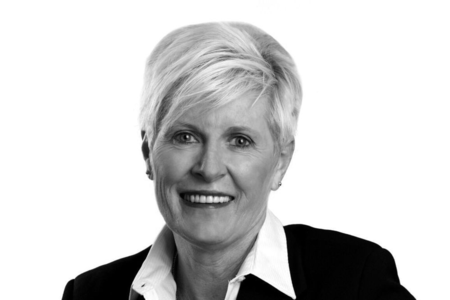 At the customer coal faceNGS Super executive manager, customer, Dascia Bennett says more than ever super funds must be aligned to their customers. She tells Darren Snyder what ... 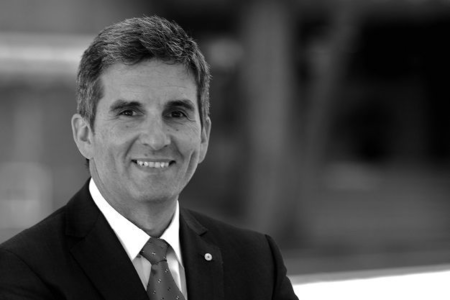 The magic numberAirTree Ventures founder Daniel Petre went from working with Bill Gates to becoming one of Australia's leading venture capitalists and philanthropists. 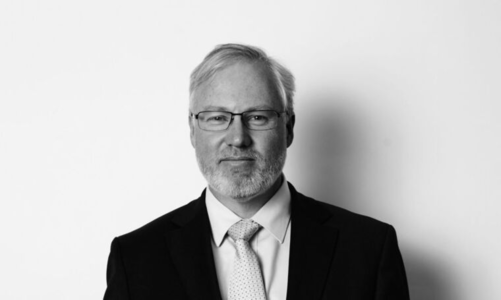 Super for the flying kangarooQantas Super chief executive Michael Clancy believes it is within most people's means to better understand and engage with their superannuation. He tells ... |


Editor's Choice
Asset managers turn to outsourcing, AI: Survey
Australian Fiduciaries auditor suspended for three years
ART leads retirement product race, others wrestle with covenant
MDS drags Treasury to assess FSC levy proposal

Products



Expert Feed

When geopolitics becomes a portfolio risk
Does association membership still matter?


Digital assets and where they stand in 2026
Rethinking default design in a changing market environment
Featured Profile
Sarah Shaw
4D INFRASTRUCTURE