

|
Editor's Choice
Aware Super reshapes governance team, appoints chief risk officer
Aware Super has announced a leadership reshuffle, appointing a new chief risk officer amid the departure of its long-serving group executive of legal.
IFM lifts stake in Atlas Arteria to 40% after upping offer price
IFM Investors has raised its stake in Atlas Arteria from 34.5% to 38.3% in an on-market stock purchase, just a day after it raised its offer price for the toll road operator to $5.10 per security.
Zenith bolsters research, investment capabilities with new hires
Zenith has announced two senior appointments to strengthen its research and portfolio management divisions.
Regulators push for stronger stress-testing capability, resilience
The ability to remain resilient and manage liquidity pressures amid severe, multi-dimensional stress scenarios is an area of focus that APRA and ASIC want superannuation funds to improve.

Further Reading
Products



Expert Feed


When geopolitics becomes a portfolio risk
Geopolitics is back - again - and Australian investors can no longer treat it as distant background noise.

Does association membership still matter?
With all the changes the advice sector has experienced in recent years, such as regulatory reform and increased education and professional standards ...


Digital assets and where they stand in 2026
So far in 2026 digital assets have captured the headlines largely for the wrong reasons, but that doesn't tell the full story.

Rethinking default design in a changing market environment
The evolution underway in the US DC system highlights the value of periodically reassessing default design assumptions.
Featured Profile
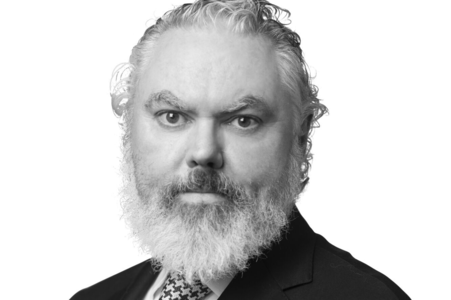
Brian Redican
CHIEF ECONOMIST
NEW SOUTH WALES TREASURY CORPORATION
NEW SOUTH WALES TREASURY CORPORATION
What makes an economist an economist? TCorp chief economist Brian Redican reflects on over three decades of navigating Australia's economic cycles. Riddhima Talwani writes.