

|
Editor's Choice
Mixed inflation data keeps August RBA meeting a 'live' one
Australia's Consumer Price Index (CPI) rose 3.8% in the 12 months to June, down from 4% in the 12 months to May 2026, according to the Australian Bureau of Statistics (ABS).
Emerging markets, private assets lift NGS Super FY26 performance
Emerging markets, commodities and maturing private assets took the shine away from equities, helping deliver nearly 12% p.a. for NGS Super members over the last financial year.
ATO issues guidance on new LRBA rules for SMSFs
The Australian Taxation Office (ATO) released new guidance for SMSFs affected by the looming limited recourse borrowing arrangement (LRBA) changes for residential property, with the SMSF Association (SMSFA) saying it provides important clarity for trustees ahead of the reform.
Igneo makes three acquisitions, launches energy platform
Igneo Infrastructure Partners has launched a dedicated Australian distributed energy platform, Vertis Energy, alongside a series of acquisitions that will provide the business with an initial portfolio of 46 MW of solar assets.

Further Reading
Products



Expert Feed


When geopolitics becomes a portfolio risk
Geopolitics is back - again - and Australian investors can no longer treat it as distant background noise.

Does association membership still matter?
With all the changes the advice sector has experienced in recent years, such as regulatory reform and increased education and professional standards ...


Digital assets and where they stand in 2026
So far in 2026 digital assets have captured the headlines largely for the wrong reasons, but that doesn't tell the full story.

Rethinking default design in a changing market environment
The evolution underway in the US DC system highlights the value of periodically reassessing default design assumptions.
Featured Profile
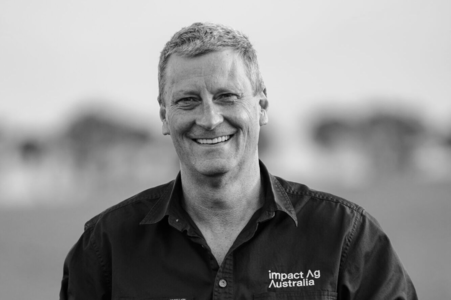
Hugh Killen
MANAGING DIRECTOR AND CHIEF EXECUTIVE OFFICER
AUSTRALIAN AGRICULTURAL COMPANY LIMITED
AUSTRALIAN AGRICULTURAL COMPANY LIMITED
For Hugh Killen, several life lessons came from spending time on pastoral properties stretching across northern New South Wales and South-West Queensland.