


The future of advice fee structuresBY JAMIE WILLIAMSON | MONDAY, 18 JUN 2018 12:26PM To ensure the success of financial advice businesses in the post-Royal Commission world, financial advisers must separate planning and product advice fees, as well as benchmark both planning advice fees and portfolio performance. Related News |


Editor's Choice
IFM raises Atlas Arteria's bid, urges shareholders to accept
|IFM Investors has raised its bid for Atlas Arteria to its maximum consideration of $5.10 per security, calling it the best and final offer in the absence of a competitive offer.
ASIC secures record $300m penalty over 'egregious' CFD misconduct
|The Federal Court has imposed record penalties totalling more than $300 million against collapsed contracts for difference (CFD) issuer Union Standard International Group and two of its former authorised representatives.
ASX to pay $23m, admits misrepresentation over CHESS replacement
|ASX has admitted that it misled and exposed market participants to financial risk in an announcement related to the delivery of the CHESS replacement project in early 2022, despite realising the delay would occur as early as 21 December 2021.
ACCC approves Magellan, Barrenjoey merger
|The ACCC has greenlit the merger between Magellan Financial Group and Barrenjoey Capital Partners.

Products



Expert Feed


When geopolitics becomes a portfolio risk
Geopolitics is back - again - and Australian investors can no longer treat it as distant background noise.

Does association membership still matter?
With all the changes the advice sector has experienced in recent years, such as regulatory reform and increased education and professional standards ...


Digital assets and where they stand in 2026
So far in 2026 digital assets have captured the headlines largely for the wrong reasons, but that doesn't tell the full story.

Rethinking default design in a changing market environment
The evolution underway in the US DC system highlights the value of periodically reassessing default design assumptions.
Featured Profile
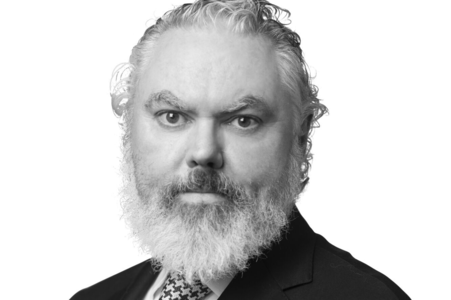
Brian Redican
CHIEF ECONOMIST
NEW SOUTH WALES TREASURY CORPORATION
NEW SOUTH WALES TREASURY CORPORATION
What makes an economist an economist? TCorp chief economist Brian Redican reflects on over three decades of navigating Australia's economic cycles. Riddhima Talwani writes.













Well clearly this bloke knows nothing at all, I also doubt he has ever built, created, owned, or purchased any advice business in his life! Yet he seems to have a lot to say about the subject. I have purchased five practises and all have come with Grandfathered trail commission, what are you surprised about! That is how all product was manufactured by the actuaries, not planners.
I have hired five additional staff in my practise to service and review these clients, they are some of our biggest clients and receive the same service as those on advice fee structures, the only difference is that trail commission tops out at .6% and the average industry advice fee is 1%. You tell me Romic how charging clients .4% more is good for the client!!!
After working and talking with numerous financial planners, many have expressed their opinions that this is needed in the industry to ensure ethics in the industry are upheld between the adviser and their clients, ensuring clarity of the service and products.
In respect to the comment of "Advisers with insufficient portfolio management skills (Experience) will be at a distinct disadvantage" there are alternative solutions for advisers and their clients. Instead of advisers being disadvantaged and paying retail rates for average and underperforming managed funds, there are products on the market that enable the adviser to empower their business and their client's portfolios.
A change in practising from the old ways is needed, we will see advisers benefiting their clients, themselves and the financial industry. The financial services industry is changing, expectations of the clients are too, and so will the products that are on offer to the retail market. The question is: Who will be the leaders?
What's more important than ever are Independent financial products that don't seek to vertically integrate, are independent, trustworthy and incorruptible.
Don't forget, Romic is also a salesperson not just a consultant or commentator - this would perhaps explain why he is downplaying adviser ability in terms of portfolio management - solution - DFS Portfolio Solutions. Romic may also be confused about what a product is, ASIC have their own definition and he is certainly selling one, managed accounts.
Selecting a managed account is not a strategic decision but a product decision. If Romic were a retail financial adviser (is he?) he would perhaps understand better that a first-year apprentice builder is probably better served in CBus than a managed account solution that may require an SMSF - irrespective both would have a price tag which would need to be considered in light of the benefits.
An adviser needs to be able to defend their recommendation and prove that it is in the client's best interest - this would be down the individual client and how their best interests are served - not Romic's philosophy around value investing and bias to his managed account sollution.
Being a financial adviser is not a question of picking either strategy/planning advice or product advice - almost every strategic decision involves product choice (whether one product, another or none) even if a recommendation to change a product is not made then a recommendation to retain the existing product is inferred.
Best Interest Duty dictates that strategy and product go hand in hand, ignoring strategy and you are just selling product - fortunately most advisers are beyond this. Ignoring product though and there is no consideration for the best interests of the client.