




Editor's Choice
ASIC pushes to bolster competitiveness
The regulator has hosted a roundtable with financial services leaders to encourage competitiveness, as it fears Australia is falling behind its global peers.
Euroz Hartleys sells capital markets arm to Canada's BMO
Euroz Hartleys has sold its capital markets business to Canada's BMO Financial Group (BMO) for $145 million in an all-cash deal.
ETF adoption hits 'meaningful threshold' among SWFs
Nearly 40% of sovereign wealth funds have an allocation to ETFs, a new report from Invesco shows, underscoring their expanded roles among institutional investors as their rate of adoption hits a "meaningful threshold".
Super system to hit $12.4tn by 2045
Australia's superannuation system is forecast to triple in size over the next two decades reaching $12.4 trillion by 2045, as sustainable retirement outcomes become the sector's defining challenge.

Products



Expert Feed


When geopolitics becomes a portfolio risk
Geopolitics is back - again - and Australian investors can no longer treat it as distant background noise.
Does association membership still matter?
With all the changes the advice sector has experienced in recent years, such as regulatory reform and increased education and professional standards ...


Digital assets and where they stand in 2026
So far in 2026 digital assets have captured the headlines largely for the wrong reasons, but that doesn't tell the full story.
Rethinking default design in a changing market environment
The evolution underway in the US DC system highlights the value of periodically reassessing default design assumptions.
Featured Profile
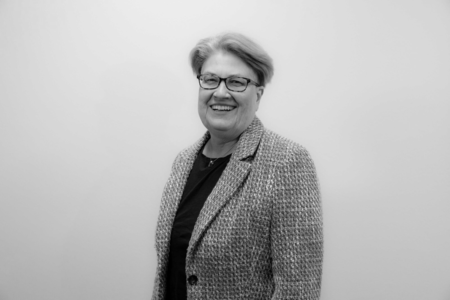
Judith Fiander
CHIEF EXECUTIVE OFFICER
AUSTRALIAN PHILANTHROPIC SERVICES
AUSTRALIAN PHILANTHROPIC SERVICES
When Judith Fiander first walked in the doors of Australian Philanthropic Services her intention was to volunteer for a few months. Fast forward 14 years and she is the chief executive. Eliza Bavin writes.












Being both a financial adviser and a beef cattle producer I see things on both sides of the fence (pardon the pun). The reality is that ever since governments became addicted to the royalties and taxes from the resources sector they have dropped the ball on agriculture. The city/country divide prevented many voters and politicians from understanding agriculture. The Netherlands is a small, densely populated country, with more than 1,300 inhabitants per square mile. It's bereft of almost every resource long thought to be necessary for large-scale agriculture. Yet it's the globe's number two exporter of food as measured by value, second only to the United States, which has 270 times its landmass. Australia has 179 times the land mass.
Simply, the Dutch government twenty years ago made a conscious decision to prioritize agriculture and made a national commitment to sustainable agriculture under the rallying cry "Twice as much food using half as many resources." We need to ask ourselves how and why we dropped so far down the pecking order in agriculture with all the advantages that we had.
Years gone past I talked to various fund managers and superannuation fund executives about the opportunities in Australian agriculture, whilst their eyes were glazing over, European and North American Pension Funds were investing in our agriculture. In short, they understood Australian agriculture better than Australians did.