




Editor's Choice
Federal Court calls out ASIC for re-running case on appeal
|The Full Federal Court of Australia has criticised regulators for falling back on appeals to re-litigate cases on a different legal basis than the one run at trial.
Evergreen founder exits Ascalon Capital
|Ascalon Capital has bid farewell to Evergreen Consultants' founder Angela Ashton, shortly after acquiring the consulting firm last year.
Powerhouse Ventures partners with European fund manager
|ASX-listed Powerhouse Ventures has partnered with an unnamed European fund manager that will commit US$50 million to its fledgling Critical Infrastructure Opportunities (CIO) Fund.
KeyInvest unveils new investment platform, awards mandate
|KeyInvest has launched a new investment platform to include a plethora of investment strategies ranging from private credit to global equities.

Products



Expert Feed


When geopolitics becomes a portfolio risk
Geopolitics is back - again - and Australian investors can no longer treat it as distant background noise.

Does association membership still matter?
With all the changes the advice sector has experienced in recent years, such as regulatory reform and increased education and professional standards ...


Digital assets and where they stand in 2026
So far in 2026 digital assets have captured the headlines largely for the wrong reasons, but that doesn't tell the full story.

Rethinking default design in a changing market environment
The evolution underway in the US DC system highlights the value of periodically reassessing default design assumptions.
Featured Profile
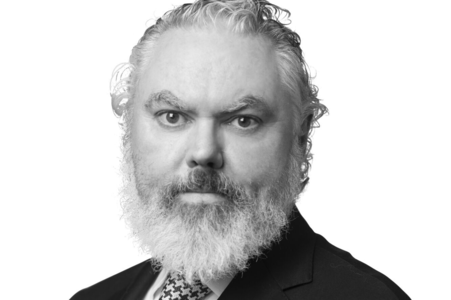
Brian Redican
CHIEF ECONOMIST
NEW SOUTH WALES TREASURY CORPORATION
NEW SOUTH WALES TREASURY CORPORATION
What makes an economist an economist? TCorp chief economist Brian Redican reflects on over three decades of navigating Australia's economic cycles. Riddhima Talwani writes.














Keating is spot on, except he does not go far enough. The first element of "overhauling" the current Superannuation system is for compulsory contributions by employees. The billions of dollars held in "lost" Superannuation accounts demonstrates that the majority of people do not really see it as their money as they have put no evident skin in the game. Having the contributions made solely by employers gives this impression. Certainly a case can be put 100% that salaries and wages have been and are "adjusted" to allow for the cost of the contributions which could then lead to an impression that the employee is paying. The important issue is the impression & they do not really see this.
The second element is increasing the employer component. I would leave it to someone with superior knowledge like a Paul Keating to accurately (??) determine what is needed. The third element is that there are hundreds of thousands of self employed (sole traders and/or those operating under a partnership) who are not compelled to contribute for their future.
They should have to pay a prescribed higher rate of tax with the increase going towards Superannuation. Little Johnnie was indeed kind with the halving of the Assets Test, but one must also consider that Politicians on taxpayer funded Superannuation (and others) became substantial beneficiaries of the removal of taxation on pensions or moneys extracted from Superannation after age 60. A fourth element should be increasing the age that one can access Superannuation monies. Those who perform heavy duty manual work need to be considered carefully in whatever changes take place as they generally have shorter working capabilities.