




Editor's Choice
Frontier awards custody mandate for ICIO offering
Frontier Advisors has awarded a custody and administration mandate for its independent chief investment officer offering to the Australian market.
Alexander Funds names new chief executive
Alexander Funds has named a new chief executive, hiring from Australian Unity and set to take on the role September 7.
Soul Patts to pocket $1.89bn from Brickworks divestment
Washington H. Soul Pattinson & Co is set to receive $1.89 billion after agreeing to divest its stake in Brickworks' industrial joint venture property trusts to Goodman Group, freeing up capital for future investment opportunities.
ASIC expands list of super lead generation entities
ASIC has names 19 additional entities involved in superannuation lead generation activities as part of an ongoing review into business models that may encourage consumers to switch super funds unnecessarily or inappropriately.

Products



Expert Feed


When geopolitics becomes a portfolio risk
Geopolitics is back - again - and Australian investors can no longer treat it as distant background noise.

Does association membership still matter?
With all the changes the advice sector has experienced in recent years, such as regulatory reform and increased education and professional standards ...


Digital assets and where they stand in 2026
So far in 2026 digital assets have captured the headlines largely for the wrong reasons, but that doesn't tell the full story.

Rethinking default design in a changing market environment
The evolution underway in the US DC system highlights the value of periodically reassessing default design assumptions.
Featured Profile
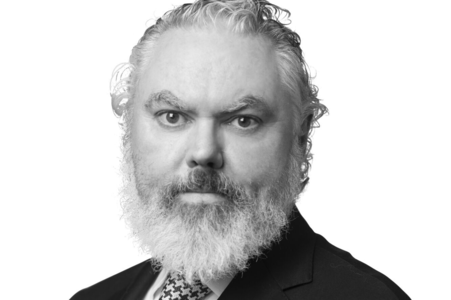
Brian Redican
CHIEF ECONOMIST
NEW SOUTH WALES TREASURY CORPORATION
NEW SOUTH WALES TREASURY CORPORATION
What makes an economist an economist? TCorp chief economist Brian Redican reflects on over three decades of navigating Australia's economic cycles. Riddhima Talwani writes.















It never ceases to amaze me the repetitive and evangelistic nature of advisers who through their own choice have decided to structure their business around direct fees as opposed to a commission model, preach and tell the remaining vast majority of advisers, what they should do and how they should do it. It is like they have been saved and now want to save everyone else.
The interesting thing is that the remaining vast majority don't repetitively preach to the advisers charging direct fees or rebating commission to stop doing it or you will go blind!
What they don't understand is that the system is not broken and that the consumer should always be provided with freedom of choice as to how they pay for advice as long as the advice satisfies all requirements and is in the clients best interest.
It seems that advice businesses that don't rely solely on financial services particularly life-risk insurance for the bulk of their revenues don't understand the nature of commission vs fees.
If fees were the only remuneration advisers charge for life-risk insurance the under-insurance problem we have in this country would be made worse, times 10! Which self-respecting person is going to pay, for instance, $1000 pa for his life insurance and then be asked to pay fees of about $800 as well if, as it stands, the premium would be $1800 with the commission factored in.
It just isn't going to happen. As Jenny brown above said, it was tried in the UK and didn't work. Why not learn form another's mistake - it's much less costly than making our own.
Hi Craig - I'm not sure but I assume your comments about preaching and being evangelistic were referring to me (if not please disregard). In explaining how I do business, in no way am I telling anyone else what they should do.
Risk commissions may stay or go but you're crazy if you haven't given at least some thought to what you would do if they go.
I'm part of an accounting practice and the initial proposal for APES230 would have seen the banning of commissions for us and every other member of ICAA or CPA.
What I don't agree with is when someone says they couldn't survive without upfront commissions because that is how it has always been done.
Paul - Interesting to note the experience in the Netherlands as well. According to this article the banning of commissions has worked there. It's worth noting that it was gradual over 10 years which no doubt made a big difference: http://www.covermagazine.co.uk...