

Fold by fold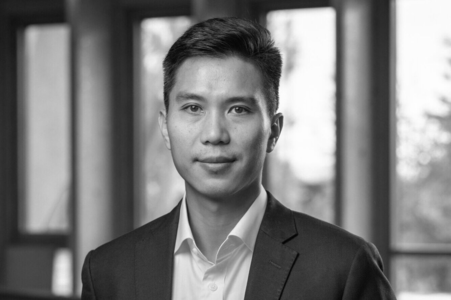 ETF Shares chief executive Cliff Man spent his career automating, building and challenging established systems. Now, he is betting that Australia's ETF market has room for something different. Vinny Vucago writes. There is a certain symmetry to Cliff Man's career. From a child growing up in Hong Kong making toys out of paper because his family could not afford many, to years later, building investment systems from scratch and launching a fund manager of his own - the material has changed. The instinct has not. I had to solve my own boredom. For the chief executive and co-founder of ETF Shares, the exercise was more than childhood ingenuity. It became an early lesson in making something from very little."As long as you found something, you're able to create something," he says. That philosophy now sits at the centre of a career spanning technology, portfolio management, law and financial services and a new business that is trying to prise open Australia's concentrated ETF market. Man's family arrived in Hong Kong with little. His father had attempted several times to swim from mainland China to Hong Kong before eventually making it. His mother took a different route, but both arrived towards the end of 1979. "My parents literally had nothing when they arrived in Hong Kong," he says. "If you swim to another place, you have no one to rely on. You really start with nothing" Money remained tight through his early years, with much of what his parents earned sent back to relatives in China. Growing up, Man always senses a quiet distance between his world and that of the local Hong Kong kids who "had more resources," as he puts it. While other children played with store brought toys, his parents were out working," struggling every day to earn money," and there wasn't much spare time or cash for him. "I had to solve my own boredom," he says. "Paper was the cheapest thing in the world, so I started folding origami, borrowing books from the public library or picking them up second hand. As long as you could find something." Sheet by sheet, cranes and creatures took the place of plastic toys. When his parents did offer to buy him something, he would brush it off saying, 'I can make it myself.' "That was my upbringing, almost no resources, just a humble background and a lot of imagination. And the way I see it now is that it helped me enormously. It taught me that you can start with nothing," he says. That willingness to begin with a blank page would prove useful decades later, and a resounding message throughout his career, even early on when he walked away from a senior role at Global X to build ETF Shares. But before finance, there was technology. Man studied computer science at university and after graduating in 2006, joined a small Hong Kong start-up developing an online spreadsheet, years before Google Sheets became ubiquitous. The company had only around eight employees when he joined. It was an early lesson in what a small team could accomplish when technology changed the rules. "You got such a small team able to create amazing product, and eventually a bigger company trying to acquire you," he says. The start-up struggled to raise capital during the Global Financial Crisis, and Man eventually moved into finance. But the entrepreneurial lesson stuck. The company was later sold to Apple. Man's entry into finance was almost accidental. His first exposure came through an internship at the Hong Kong Monetary Authority, where he had initially been placed in technology. A shortage of staff in risk management and compliance led to an unexpected transfer. His experience with automation made him useful. "Eventually I was the only one who got picked by the head of risk management and compliance, and that's how I started in finance," he says. That eventually led him to Hang Seng Investment Management, where he moved directly into ETFs. The fit was natural. "With computer science background, a lot of things that you learn is how to automate things," Man says. At the time, ETF infrastructure was far less developed than it is today. Managing a portfolio could mean stitching together multiple spreadsheets and manually moving data between systems. Man's first major task was to automate the process. That became a recurring theme throughout his career. At ETF Securities and later Global X, he built portfolio management infrastructure from scratch, bringing together custody, fund administration and index data into systems designed specifically for ETF management. At one point, he says, the first version took around two months to build. The result was more than an operational convenience. It gave him an unusually intimate understanding of how ETFs actually worked. "If you have some new features in your ETF, you can build it," he says. "Other people have to engage a contractor." That technical fluency helped Man become a portfolio manager, then co-head of portfolio management and ultimately head of portfolio management and second-in-command at Global X. The business expanded. During that period, the business expanded across equities, fixed income, commodities, crypto and other strategies. But Man was not content on climbing the corporate ladder. The entrepreneurial instinct remained. When Global X was acquired by Mirae Asset Management, Man and fellow ETF Shares co-founder David Tuckwell stayed on to help ensure a smooth transition. Eventually, however, they decided to build something themselves. For Man, starting again was not necessarily the frightening leap it appeared to be. Growing up without much had made that blank page familiar. Most people might struggle with that, but for Man it felt like an opportunity. That blank page became ETF Shares. The company launched as Australia's first new index ETF issuer in more than a decade and the only locally owned ETF issuer, with Man as chief executive and Tuckwell as chief investment officer. The founders saw an Australian market that was more concentrated than overseas markets and believed there was room for greater competition and product innovation. But Man is careful about the idea that being Australian owned automatically makes ETF Shares better. "Locally owned itself won't give us an advantage," he says. The advantage, he argues, is speed. Being small means decisions can be made without the layers of approval required inside larger institutions. "We have more of a flexibility to make our decision," he says. That flexibility is also central to how Man wants ETF Shares to operate. The company is not interested in launching products simply because an investment theme is fashionable. "We're not going to launch another space ETF just to chase hot money. That's definitely not our style," Man says. It's the same reason he's sceptical of certain leveraged ETFs that, in his view, prioritise novelty and asset gathering over how they behave in real markets when conditions turn. Instead, the firm wants to identify areas where investors have a genuine need that existing products are not addressing. Its first products reflect that philosophy, targeting copper and lithium, for example, are areas he believes Australian investors already have some familiarity but may benefit from broader exposure. The challenge is that innovation only works if investors understand what they are buying. "You're always trying to bring new ideas in front of the investor," Man says. That creates an unusual problem for a young fund manager: convincing investors to buy something without the long track record they might expect from an established issuer. The company therefore has to balance innovation with patience. Its small size helps. "We have the luxury to make those call for the investors to use our product that we believe is good for them over long term," Man says. The same philosophy applies to the next generation of products. Man says ETF Shares is hearing demand for income-oriented strategies following tax changes, but he is wary of simply chasing headline yields. The danger, he says, is an "income trap" where investors sacrifice portfolio growth in pursuit of distributions. The company's approach is therefore less about being first and more about being deliberate. Man, for example, has criticised some leveraged ETFs for failing to sufficiently consider what happens when markets become stressed, particularly where concentrated exposure meets thin liquidity. "I'm not saying leverage is outright wrong. In theory it can be perfectly sensible. The problem is when you design a product that, in a stressed or less liquid market, can have a bigger impact than it should," he says. The problem, he argues, is product design that prioritises getting something to market over understanding how it could behave under pressure. "If you just want to rush to create a product, actually having a gear on SK Hynix, you can do it," he says. "But it's risky and is also not well thought through." It is an attitude that neatly captures the broader philosophy behind ETF Shares: innovative in design yet disciplined in execution. Man's scepticism extends to artificial intelligence, although not to its usefulness. He sees obvious efficiency gains in the operational side of funds management, where AI could automate tasks across custodians, administrators and fund managers. But he is less convinced by handing investment decisions entirely to machines. "We still believe that a robust investment thesis is something people's able to understand," he says. For investors, transparency matters. "If you have AI involved, you probably will have a lot more unexpected outcome," he says. That belief in transparency is also part of Man's definition of accessible finance. An ETF, he argues, allows investors to access strategies with relatively small amounts and provides transparency around the underlying portfolio. For him, lowering costs is another part of the equation. "Making things cheaper also make things more accessible," he says. It is an idea that feels personal given where Man started. He says he and his wife still live relatively modestly despite his career success. "I've never been someone who overspends," he says. "My wife is the same, I'm very lucky. We live a pretty humble life, and we're genuinely happy with that." There is another side to Man that sits far outside the machinery of fund management. He is an ultramarathon runner. He has completed 100-kilometre races, trekked in Nepal and spent years as a competitive dragon boat paddler. These days, however, his priorities have shifted. He has a four-year-old daughter, and family has become the centre of his life. These days, much of his spare time is spent with his four-year-old daughter. "When you have little ones, your life gains another centre of gravity. It's no longer just about your career," Man says. The long runs, the dragon boat races, even the high-altitude treks have all given way to something quieter but, for him, more profound: the ordinary rituals of family life. The way he tells it, the sun has simply moved. For all the talk of entrepreneurship, technology and markets, it is perhaps the most revealing thing Man says. His career has been built around solving problems. His childhood taught him to make things from whatever was available. His professional life taught him to automate systems and challenge established ways of doing things. "I have my IT skills, I have my finance, I'm a CFA charter holder," he says. "What is missing?" For Man, that question became a prompt rather than a crisis. It sent him back to university to complete as a Juris Doctor at Macquarie University, rounding out the triangle of technology, finance and regulation that now shapes ETF Shares. "And yeah, I've done that now," he says with a laugh. "I'm not sure what's next." For now, the answer is ETF Shares, the latest expression of that instinct to start from a blank sheet and build. The paper, in other words, is still there. What he folds into it next remains to be seen.
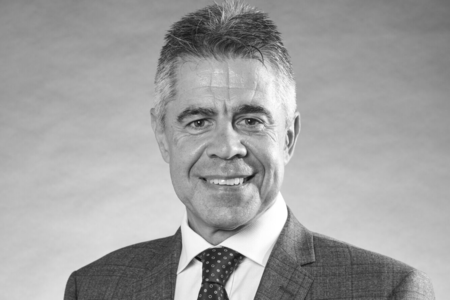 Important stepsWhile SMSF Association chief executive Peter Burgess is an extremely self-disciplined leader, he believes the association's advocacy uplift for the self-managed ... 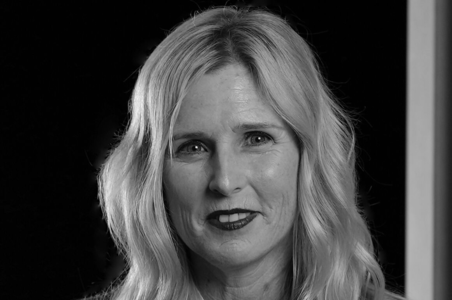 Invisible stringSimone Constant has been a commissioner at the Australian Securities and Investments Commission (ASIC) for two years. In that time she has achieved a ... 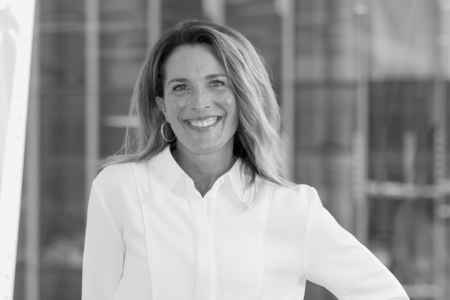 High achieverSarah King has crossed the seas and different industries to land at Stockspot, where she helps the fund manager and digital investment adviser reach new ...  Ready to engageAs chief engagement and growth officer, Joshua Parisotto is determined to improve outcomes for HESTA members and employers and brings all he learns outside ...  Broad strokesWith around two decades under her belt, Mary Delahunty is focused on the big picture for the future of superannuation. Eliza Bavin writes.  Family valuesRQI Investors chief executive Andrew Francis knows the value of hard work and meaningful relationships drive a successful business thanks to his family.  Built on understandingActive listening and meeting people - both employees and clients - where they are is at the heart of how Lidia Tomova is leading the next phase of DWS ...  Primed to performGeneration Life chief executive Felipe Araujo has come a long way. From not speaking a word of English to taking on a leadership role within an ASX 200 ...  The human algorithmArmina 'Arms' Rosenberg is building a digital twin of herself at Minotaur Capital, turning information into disciplined conviction. Riddhima Talwani writes.  Built to lastTotality chief executive Adam Smith has a knack for scaling small operations. He tells Karren Vergara why the financial markets are as exciting as ever ... |


Editor's Choice
AMP, CFS and Vision Super get the Epic Retirement Tick
|Another C-suite member leaves Rest
|Brookfield AM managing partner calls time
|MLC Super cuts admin, investment fees
|
Products



Expert Feed

When geopolitics becomes a portfolio risk
Does association membership still matter?


Digital assets and where they stand in 2026
Rethinking default design in a changing market environment
Featured Profile
Cliff Man
GLOBAL X ETFS AUSTRALIA