


FEATURE | Nature risk | Paved paradiseBY KARREN VERGARA | TUESDAY, 29 SEP 2026 12:00PM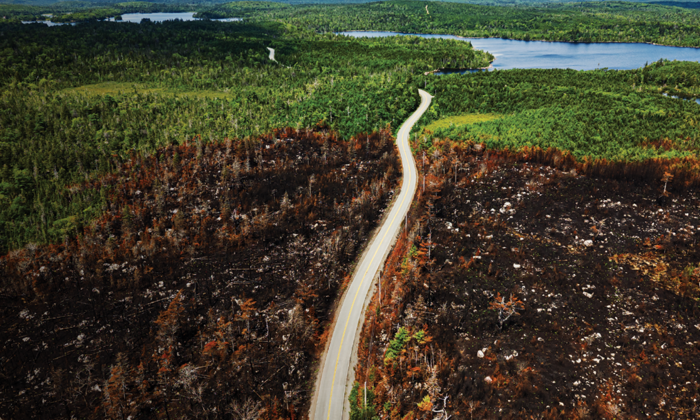 The central highlands of Victoria teem with lush Eucalytpus regnans or mountain ash, the world's tallest flowering plants, which are also native to Tasmania. Researchers from the Australian National University found that mountain ash also possesses the world's highest biomass carbon density. This is something worth boasting about because it means more of this gas is contained in the plants and locks in greenhouse gases (GHG) that would otherwise infiltrate the atmosphere. The researchers, though, urge that as a national priority, mountain ash's ability to maintain and increase its carbon storage capacity should be protected as they are at grave risk of collapse within half a century. Industrial logging is the mountain ash's major source of destruction, particularly from clearfell harvesting, in which most of the plants are cut down in one fell swoop. Brendan Wintle, the lead councillor of the Biodiversity Council, describes these as the "lungs" and source of freshwater generation for the city of Melbourne. What we're now seeing is that because of changing climate conditions and historical forest management practices, these ecosystems are burning more frequently. "What happens when a mountain ash stand burns inside for 20 years is that the trees haven't grown old enough to reach sexual maturity, to set seed and create the next generation of alpine or mountain ash trees," he explained at the recent Responsible Investment Association Australasia (RIAA) Conference. "We have too many fires in this landscape, we see a slip from an amazing mountain ash forest to essentially an acacia-dominated woodland that cannot store anything like the carbon that tends to burn really fast. This is a dramatic ecosystem change." Australia also takes the crown as the country with the highest rate of biodiversity decline of any developed nation, according to the Threatened Species Index. A 2021 government study also found Australia has lost more mammal species than any other continent and continues to have one of the highest rates of species decline among countries in OECD nations. At the time, more than 1900 native species and ecological communities were reported to be threatened or at risk of extinction. Fast forward to 2026 and many of Australia's ecosystems are in clear and present danger. What does ecosystem collapse mean? Wintle explains that it means the loss of the ecological functions and species that form the fabric of those ecosystems. "Australia has an extraordinary environmental [and] remarkable legacy. Nature is an important part of our national identity, which is why its decline is such a significant challenge," he says. Another challenge is trying to define the type of risk that has befallen Australia. Is it nature-related risk or climate-related risk? Or perhaps a bit of both? Climate risk is defined as the potential for climate hazards to cause harmful consequences to human lives, economic and ecological systems, as well as social and cultural assets and investments, such as bushfires, droughts or floods. "Fundamentally, nature risk is the risk associated with the loss of biodiversity, deforestation, the availability or non-availability of water, and all of those risks that are related to nature," the Australian Council of Superannuation Investors (ACSI) chief executive Louise Davidson explains. "Like climate change, nature or biodiversity risk is something investors can't diversify away from. It's so pervasive across the whole economy, and we're so dependent on nature for so many parts of our lives, whether it's food, health, productivity and so on. So, it has the potential to have a really wide-reaching impact on companies and investors." When nature underpins the very basis of humanity, Davidson stresses that investors must be cognisant of its endemic and non-diversifiable or systematic risk. While investors have yet to diversify from nature risks by, say, moving to Mars, the next-best option is to choose not to invest in particular sectors based on an ethical approach, whether that's fossil fuel exclusions or controversial weapons exclusions. "You can't really have a nature-risk exclusion. Yet, nature risk has so many impacts on companies in different ways," Davidson says. An analysis of top ASX-listed companies in the Biodiversity Council's 2026 report, Cracking the code, reveals that nature risk is highly concentrated among select industries. Utilities, energy, materials, industrials and consumer staples pose the greatest risk to biodiversity loss, highlighting growing financial and operational risks for investors and companies alike. Greenhouse gas emissions, water consumption and land use pressures were identified as the primary drivers. While utilities recorded the highest median biodiversity impact, the sector contains relatively few ASX200 companies, all of which showed consistently high impacts across assessment methodologies. However, six of the 10 companies with the largest nature-related impacts were found in the materials sector, reflecting the significant influence of large-scale mining and resources businesses on Australia's environmental footprint. In the economic world, mining is as synonymous with Australia as Vegemite and kangaroos are with its national identity. According to the government's Office of the Chief Economist, the resources and energy sectors contributed around 11.4% of the nation's GDP in the 2025 financial year, making them the top exports by a large margin. The mining industry is also one of the top contributors to the workforce, employing 241,000 people in FY25, the Australian Bureau of Statistics estimates. While the country depends on the mining and resources sectors to provide jobs and top up its coffers with billions in revenue, a dark economic underbelly exists: the environmental impacts can be devastating, leading to deforestation and the loss of wildlife habitats and degraded biodiversity. Even when operations shutter or mines are decommissioned, they cause lingering environmental damage via toxic metals and soil contaminants entering water systems. Commenting on the findings, Wintle says it comes as no surprise that the major mining and energy companies rank among those with the largest direct impacts on nature, including water consumption, greenhouse gas emissions, land disturbance and land clearing. Beyond the direct impact, consumer staples in the form of major retailers and financial institutions emerge as having substantial impacts because of their supply chains and downstream influence. "Retailers, for example, influence waste generation and supply chain practices. Financial institutions influence outcomes through the businesses they finance and lend to," he says. "It's a very important shift in perspective. What we're seeing is a substantial difference between direct impacts and indirect impacts, and it's something we need to take very seriously." Data digestion The reality is that nature is complex and multifaceted. Measuring nature-related risks is tall order even when grasping the concept itself has been challenging. Geospatial tools are a credible contender in helping bridge that gap. Josh Gilbert, the head of geospatial strategy at ISS STOXX, says geospatial analytics can help thanks to the abundance of data generated over the last decade from a range of sources, not just in the form of satellite data and Earth observation, but also sensors, corporate disclosures and other channels. "I think the foundational problem remains the same. We don't have a data-starvation problem. We have a data-digestion problem," he told the recent Greener Way Podcast. For investors in this age of data abundance, the challenge is asking, 'How do we take all these different pieces of information and put them together?' "First, it's about unpacking a very complex puzzle. Second, and perhaps more importantly for investors, it's about taking data that is geospatial or spatio-temporal in nature, meaning data across space and time, and translating it into the world of financial information," he says. This article is featured in Financial Standard's fortnightly newspaper Volume 24 Number 18. To keep reading click here. To subscribe, sign up here. Related News |


Editor's Choice
CFS launches retirement income optimiser
Perpetual names insto relationship, funds services lead
Woodbridge loans $100m for Brisbane residential development
Chalmers applauds $22bn Budget deficit
Products



Expert Feed


When geopolitics becomes a portfolio risk

Does association membership still matter?


Digital assets and where they stand in 2026

Rethinking default design in a changing market environment
Featured Profile

Rachel Alembakis
UNITING ETHICAL INVESTORS LIMITED




The Financial Standard podcast Tune in each week as we discuss the latest developments in Australia's wealth management industry. |  |