


Don't ignore Lifecycle Funds: MercerBY BEN COLLINS | TUESDAY, 13 NOV 2012 11:50AMThe benefits of Lifecycle Funds are not understood in the superannuation sector, and they should be considered as a default option under MySuper, said Mercer. |



Editor's Choice
Australia, UK partner to procure well-regulated financial markets
Following its inaugural meeting in September 2025, the second UK-Australia Joint Financial Regulatory Forum took place this week, with Australia remaining vocal about placing greater emphasis on governance and asset valuation of private markets.
Count takes 30% stake in Brisbane advice firm
Count has agreed to acquire a 30% stake in Brisbane-based accounting and financial advice firm Apiary Financial, continuing its push to expand its equity partnership network while reporting stronger first-quarter earnings.
Audit quality continues to fall short: ASIC
The corporate regulator has called for improvements in audit quality and financial reporting after its latest surveillance found companies, including superannuation funds, are still not getting the fundamentals right.
ETFs entering 3.0 era: JPMAM
JPMAM believes thematic ETFs may become a thing of the past as actively managed ETFs become more prevalent.

Further Reading
Products



Expert Feed


When geopolitics becomes a portfolio risk
Geopolitics is back - again - and Australian investors can no longer treat it as distant background noise.

Does association membership still matter?
With all the changes the advice sector has experienced in recent years, such as regulatory reform and increased education and professional standards ...


Digital assets and where they stand in 2026
So far in 2026 digital assets have captured the headlines largely for the wrong reasons, but that doesn't tell the full story.

Rethinking default design in a changing market environment
The evolution underway in the US DC system highlights the value of periodically reassessing default design assumptions.
Featured Profile
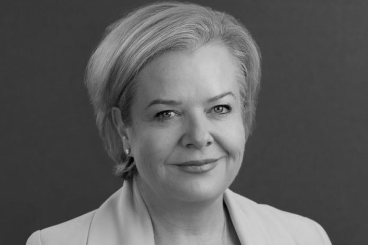
Jacqueline Fernley
CHIEF EXECUTIVE OFFICER
ARC POINT OCIO PTY LTD
ARC POINT OCIO PTY LTD
Jacqueline Fernley is a self-confessed nerd, a market animal and as of this year, her own boss. Riddhima Talwani writes.






The Financial Standard podcast Tune in each week as we discuss the latest developments in Australia's wealth management industry. |  |



The "proven history" around the world should include the experience in the U.S. in 2008. The most conservative TDFs - those for individuals with an imminent retirement - lost between 9% and 41%. A Joint Congressional Hearing was held by the DOL and SEC to canvass the reasons for this failure in risk management. It turns out "nothing goes up in a falling market except for correlation". Diversification doesn't insulate against losses. Any adoption of TDFs should consider this, especially if we systematically rotate investors out of equities and into fixed income, at a point where yields are at intergenerational lows.
The thought of being moved into conservative assets just because I have ticked over age 65 seems irrational. With potentially 30 years ahead of me in retirement, where am I getting growth from to support my income needs? Hard to believe no one has 'come up and challenged him'.
Our members experience has been most positive in running an age based lifecycle default for the last 8 years and over a full economic cycle. This includes a loss of only 4% over the GFC for over 65's compared to the median Balanced loss of - 18% which was inflicted on most retirees. Whilst modeling of increased risk later in life may suggest higher investment returns the key is in matching member volatility tolerance with an acceptable level of investment risk. The end result is happy members with good consistent returns over the full economic cycle. Lifecycle investing works!